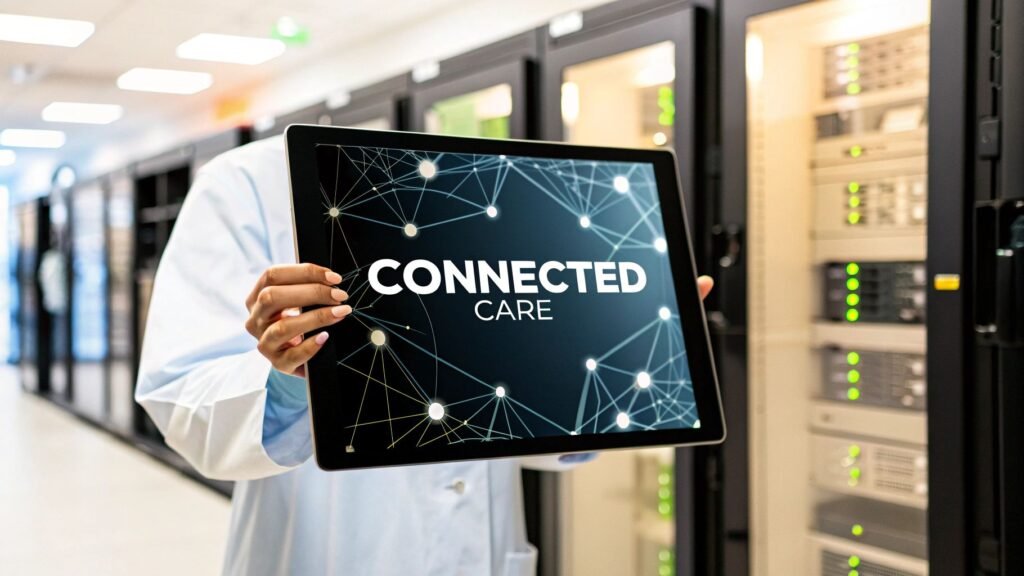
Imagine a world where your complete medical history—every lab result, every doctor's note, every prescription—is instantly available to any authorized provider who needs it. This isn't science fiction; it's the promise of electronic health records interoperability.
Simply put, interoperability is the ability of different EHR systems to exchange, interpret, and actually use patient data, no matter where it was created. It’s about breaking down the digital walls that have separated patient information for far too long.
The Dawn of Connected Healthcare
This shift from isolated data silos to a fully connected healthcare ecosystem is the very foundation of modern, patient-centric care. It’s what makes truly personalized and proactive medicine possible.
For years, healthcare data has been trapped. Think of it like a massive library where every book is written in a different language, with no translator. A patient’s records from a hospital, a specialist, and a pharmacy might all be digital, but if the systems can't communicate, the information remains fractured. Interoperability is that universal translator, finally letting these systems speak the same language.
Why Connected Data Is a Game Changer
When data flows freely and securely, the entire dynamic of healthcare improves. This isn't just a technical upgrade; it's a fundamental reimagining of how we deliver care. The whole point is to get the right information to the right person at the right time.
The benefits ripple across the entire healthcare journey:
- Reduced Medical Errors: Having a complete patient history—allergies, medications, past diagnoses—at a glance dramatically cuts the risk of preventable mistakes.
- Improved Patient Outcomes: When care teams are on the same page, they can create coordinated plans that lead to more accurate diagnoses and effective treatments.
- Empowered Clinicians: Doctors and nurses can make faster, better-informed decisions without wasting precious time hunting down records or ordering redundant tests.
- Enhanced Patient Experience: Patients are no longer burdened with filling out the same medical history forms over and over, allowing them to be more active participants in their own care.
True interoperability is more than a convenience; it's a critical safety measure. By breaking down data barriers, we create a healthcare system that is smarter, safer, and more responsive to patient needs.
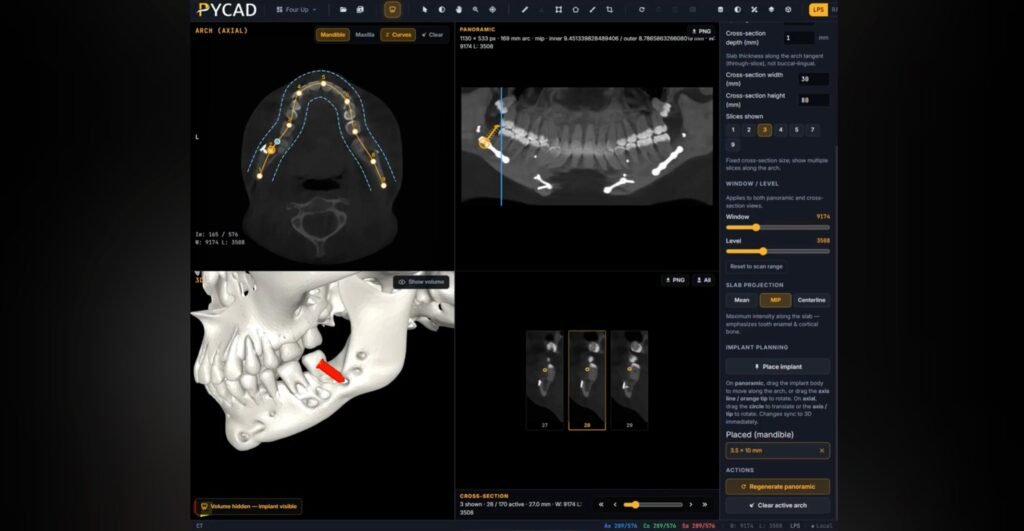
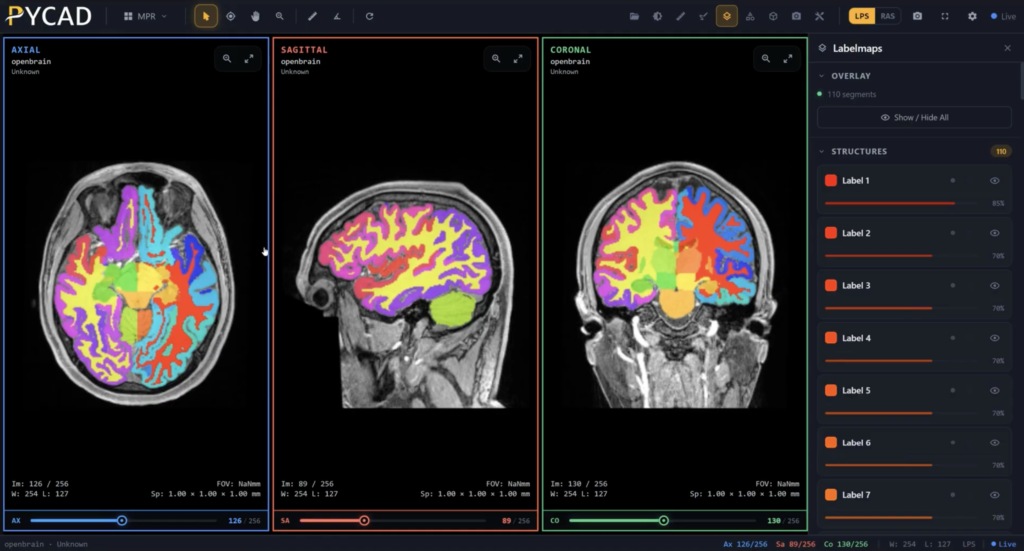
At PYCAD, we're building the tools to make this connected ecosystem a reality. We at PYCAD, build custom web DICOM viewers and integrate them into medical imaging web platforms, empowering specialists to view critical scans directly within a patient's unified record. You can see these solutions in action on our portfolio page. The journey toward full interoperability is one of the most vital missions in modern medicine, and it all starts with connecting the dots.
The Lingua Franca of Modern Healthcare
For different healthcare systems to actually talk to each other, they need a shared language. This isn't just a metaphor—it's a set of technical standards that provide the grammar and vocabulary for all health data. Without these, electronic health records interoperability remains a good idea in theory, but impossible in practice. Getting a handle on these core standards is the first step to understanding how a connected health ecosystem is truly built.
Think of these standards as different dialects, each perfected for a specific purpose. For a long time, Health Level Seven (HL7) v2 was the default dialect, the formal, structured language for most medical messages. It was the absolute workhorse for moving clinical and administrative data around—reliable and functional, but a bit rigid, like sending a telegram.
But as healthcare began to embrace the web and mobile apps, it became clear we needed a more modern, flexible way to communicate. That’s where Fast Healthcare Interoperability Resources (FHIR) changed the game.
FHIR: The Modern Dialect of Health Data
FHIR is built for the internet age. Instead of clunky, rigid message formats, FHIR breaks data down into modular components called "Resources." Imagine them as individual LEGO bricks, where each brick might represent a patient, a medication, or a lab result. These bricks can be quickly snapped together and shared using modern web APIs, making it a perfect fit for patient apps, cloud platforms, and on-the-fly data requests.
FHIR has completely shifted the conversation around electronic health records interoperability from if we can connect systems to how quickly we can innovate once they are connected.
This flexibility is why it’s been adopted so quickly. Today, using FHIR APIs is the global standard, with over 90% of EHR vendors now supporting it. This shift has been accelerated by regulations like the 21st Century Cures Act, which mandates that health data be made accessible to patients. The result? FHIR is paving the way for secure, real-time data sharing that empowers everyone, from clinicians at the bedside to patients on their phones.
DICOM and DICOMweb: A Picture is Worth a Thousand Words
While standards like HL7 and FHIR are great for text-based clinical data, medical imaging needs its own specialized language. That’s the job of Digital Imaging and Communications in Medicine (DICOM). For decades, DICOM has been the universal format for medical images, ensuring that an MRI, CT scan, or X-ray can be stored, viewed, and shared with all its critical patient data intact. You can think of it as the JPEG of the medical world.
And just as FHIR brought text-based data into the modern era, DICOMweb is doing the same for imaging. It lets clinicians access images and related data securely using standard web protocols. This means a radiologist can pull up a high-resolution scan from anywhere, on any device with a web browser, without needing to install specialized, clunky software.
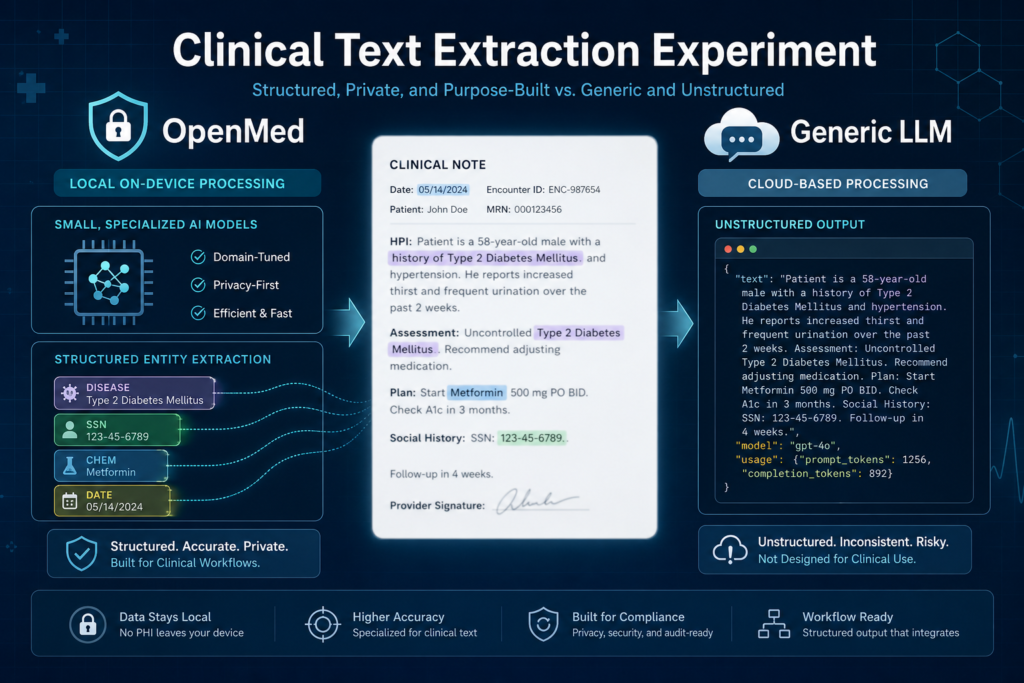
A huge part of the puzzle in achieving true data interoperability in healthcare involves making sense of all the unstructured text buried in doctors' notes and clinical reports. This is where technologies like Natural Language Processing (NLP) come in, helping to turn mountains of free-form text into structured, actionable information.
Let's break down how these core standards fit into the bigger picture.
Key Interoperability Standards Comparison
This table helps clarify the specific roles each of these crucial standards plays in the healthcare ecosystem.
| Standard | Primary Function | Key Use Case |
|---|---|---|
| HL7 v2 | Transmitting structured clinical and administrative data. | Legacy system integrations, lab results, patient admissions/discharges. |
| FHIR | Exchanging modular health data "Resources" via modern web APIs. | Mobile health apps, real-time data access, cloud-based platform integration. |
| DICOM | Storing, viewing, and sharing medical images and related data. | Archiving and transmitting MRIs, CT scans, X-rays, and ultrasounds. |
| DICOMweb | Accessing DICOM images and metadata over standard web protocols. | Web-based DICOM viewers, teleradiology, remote specialist consultations. |
Understanding these different "languages" and seeing how they complement one another is essential. They are the foundational building blocks that allow information to flow seamlessly and securely across the entire continuum of care. By mastering these standards, we’re not just connecting systems—we’re building a smarter, more responsive future for healthcare.
2. Building The Bridges For Seamless Data Flow
Now that we've covered the essential languages of health data, it's time to talk about building the actual connections. Think of it like designing a city's transportation network. It’s not enough to have cars and trains; you need highways, stations, and a shared set of traffic rules to make sure everything gets where it needs to go without a hitch.
This is the architectural blueprint that turns isolated islands of data into a truly connected healthcare ecosystem. Without these well-designed pathways, even systems that speak the same language can't talk to each other effectively. You end up with digital traffic jams that get in the way of what matters most: patient care.
The standards we've discussed—like HL7v2, FHIR, and DICOMweb—are the foundational rules of the road for this data exchange.

This image paints a clear picture, showing the journey from older, document-like data formats to modern, nimble standards for APIs and imaging. It really drives home just how diverse—and yet complementary—healthcare's communication tools have become.
Designing The Digital Highways
At the very heart of modern integration are Application Programming Interfaces (APIs). Picture APIs as direct, point-to-point highways. They let one application (say, a patient portal on your phone) make a specific request and get a specific piece of information from another system (like the hospital's EHR) in a flash. This direct connection is incredibly fast and efficient, perfect for tasks like pulling up a lab result or booking an appointment.
But what happens in a massive healthcare network with dozens, or even hundreds, of different systems? Relying only on individual highways would create an impossibly tangled mess of connections. That’s where more sophisticated integration patterns step in.
- Middleware: If APIs are the highways, then middleware is the central train station. It’s a hub that manages, routes, and even translates data traffic coming from all over the network. Middleware can take an old-school message in HL7 v2 from a legacy lab system and instantly convert it into a FHIR resource for a brand-new app. It's the ultimate translator, making sure every system can communicate, no matter its native language.
- Integration Gateways: These are the secure checkpoints at the edge of a hospital's network. They’re like border control for data, managing all incoming and outgoing requests, enforcing strict security rules, and ensuring only authorized users and systems can access sensitive patient information.
These architectural patterns give you the flexibility and control to build a network that’s both scalable and secure. And as more organizations shift their infrastructure to the cloud, platforms like the Google Cloud Healthcare API provide incredible tools to manage and standardize this data flow, making it easier than ever to build these complex bridges.
Making Sure Everyone Is Speaking The Same Clinical Language
Building the bridges is only half the battle. We also need a universal dictionary. We have to ensure that when one system says "myocardial infarction," every other system in the network understands it means "heart attack." This is the absolutely critical role of terminology services.
Without them, you might achieve syntactic interoperability—the ability to exchange data—but you fall short of the ultimate goal: semantic interoperability, which is the ability to share meaning.
Semantic interoperability is the north star of healthcare data exchange. It ensures that data is not just transferred but is also understood and actionable, preserving its clinical integrity across every system and every provider.
Two of the most important terminology standards you'll encounter are:
- SNOMED CT (Systematized Nomenclature of Medicine – Clinical Terms): This is a massive, multilingual clinical dictionary covering diseases, findings, procedures, and just about everything else. It provides unique codes for clinical concepts, cutting through any ambiguity.
- LOINC (Logical Observation Identifiers Names and Codes): Think of this as the universal standard for lab tests. It ensures a cholesterol test from a lab in one state is understood in precisely the same way by a clinic in another.
At PYCAD, we know that weaving these architectural pieces together is where the magic happens. We at PYCAD, build custom web DICOM viewers and integrate them into medical imaging web platforms, ensuring a radiologist can pull up a critical scan and instantly see it within the full context of a patient's record. You can explore our solutions on our portfolio page.
By combining robust integration patterns with standardized terminologies, we're not just connecting systems—we're building the resilient, intelligent infrastructure that a truly connected healthcare system depends on.
Securing Patient Data In A Connected World
As we connect different healthcare systems to share patient information, a critical question comes to the forefront: how do we protect the incredibly sensitive data traveling between them? Making information flow freely is a powerful goal, but it carries a massive responsibility. In this new, connected reality, security isn't just another feature—it's the very foundation of patient trust.
This isn't about putting up walls; it's about building confidence. Regulations like the Health Insurance Portability and Accountability Act (HIPAA) in the U.S. and the General Data Protection Regulation (GDPR) in Europe aren’t just hurdles to jump over. Think of them as essential blueprints for protecting patient information and ensuring every piece of data is treated with the respect it deserves.
These rules guide us in creating a system where patients feel safe, knowing their privacy is the absolute top priority. After all, true interoperability can only thrive in an atmosphere of complete trust.
The Keys to a Secure Data Kingdom
Protecting patient data demands a defense-in-depth strategy, where multiple security layers work together. Imagine you're guarding a priceless treasure. You wouldn’t just lock the front door and call it a day. You’d have vaults, alarms, guards, and a detailed log of everyone who comes and goes.
It's the same in digital health. We rely on a trio of core security measures to build a truly robust defense. Each one plays a part in protecting data, whether it's sitting in a database or moving across a network.
These are the essential pillars of security:
- Encryption: This is the digital version of a sealed, tamper-proof envelope. Encryption scrambles data into an unreadable code, and only someone with the correct "key" can decipher it. This makes the information useless to anyone who might intercept it.
- Access Controls: Think of this as giving specific keys to specific people for specific doors. Role-based access control (RBAC) is a perfect example, ensuring a nurse can only see the patient records relevant to their duties, not the entire hospital database.
- Audit Trails: This is the meticulous logbook that tracks every single action. It records who accessed what data, when they did it, and what they did. This level of transparency is vital for holding people accountable and spotting any suspicious activity right away.
Security is not the enemy of interoperability; it is its greatest enabler. When clinicians and patients have confidence that data is protected, they are more willing to participate in the open exchange of information that defines modern healthcare.
Building Trust Through Compliance
Staying compliant isn't a one-time task you can check off a list; it's a continuous commitment. It means actively implementing safeguards to ensure every data transfer is both smooth and secure. This is particularly important when handling complex data like medical images. For a closer look at the specifics, our guide on HIPAA compliant data transfer offers a great breakdown of the technical safeguards involved.
Here at PYCAD, this commitment is baked into everything we do. We at PYCAD, build custom web DICOM viewers and integrate them into medical imaging web platforms. Every line of code is written with security and compliance at its core. We know that for a radiologist to confidently view a patient's MRI from halfway across the country, the system they're using has to be built on an unshakeable foundation of privacy. You can see how we put this into practice on our portfolio page.
Interoperability In Action: Real-World Success Stories
The technical standards and frameworks are the blueprint, but the real magic happens when we see electronic health records interoperability come to life. Seeing it in action is what truly inspires. These stories show what’s possible when we move beyond theory and put connected data into the hands of clinicians, delivering real, tangible wins for them and the patients they serve.
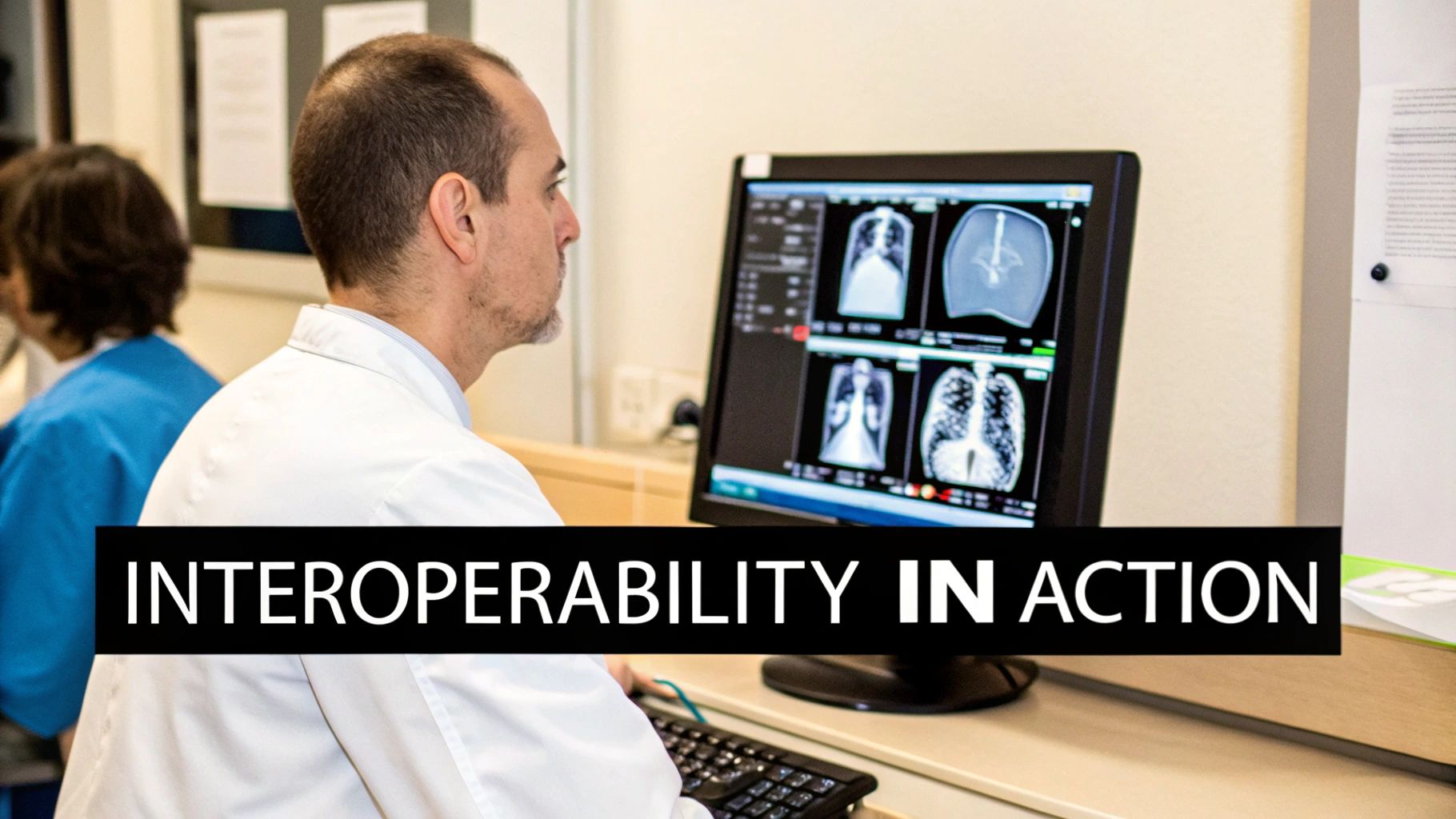
Picture a chaotic hospital emergency room. A patient arrives showing signs of a stroke—a situation where every single second is critical. In the old world, the team would be scrambling, waiting for faxes or trying to piece together a medical history from a disoriented patient.
Today, thanks to a connected Health Information Exchange (HIE), the physician can instantly pull up a complete, unified record. It’s all there: notes from the primary care doctor, records from previous hospital visits, and consults with specialists. This isn't a far-off vision; it's happening right now in health networks that have embraced true interoperability.
This immediate access to allergies, medications, and pre-existing conditions lets the clinical team make faster, smarter decisions when the stakes are highest. It dramatically improves the odds of a positive outcome.
Integrating AI for Smarter Diagnostics
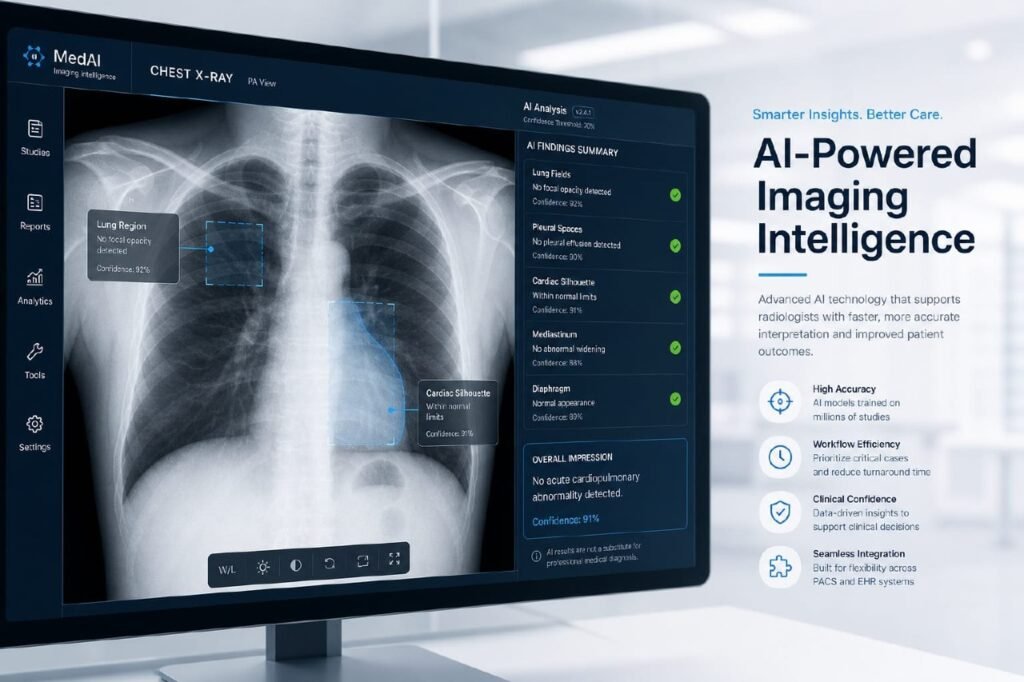
Let's look at another powerful example. A large hospital network decides to weave a sophisticated AI diagnostic tool directly into its EHR system using modern FHIR APIs. Now, when a doctor orders a chest X-ray, the image doesn’t just go to the radiologist’s queue. It’s also analyzed by an AI algorithm in real-time.
The AI is trained to spot subtle signs of pneumonia or a collapsed lung, flagging anything suspicious for the radiologist's immediate attention. This integration doesn't replace the expert; it acts as a vigilant co-pilot, ensuring critical findings are highlighted right within the team's existing workflow.
By embedding intelligent tools directly within the EHR, healthcare organizations are transforming diagnostics from a reactive process into a proactive one. This seamless flow of information and insight empowers clinicians to intervene earlier and with greater confidence.
This isn’t just about being faster; it’s about augmenting human expertise. The physician always makes the final call, but the AI provides an invaluable safety net, helping to prioritize the most urgent cases and reducing the chance of human error. This incredible synergy between human and machine is only possible when data flows freely.
Transforming Medical Imaging Access
Medical imaging has always been one of the biggest—and most rewarding—interoperability puzzles to solve. For years, sharing massive files like MRIs and CT scans was a clunky, frustrating process involving physical CDs or clashing, proprietary software. This is a barrier we are passionate about tearing down.
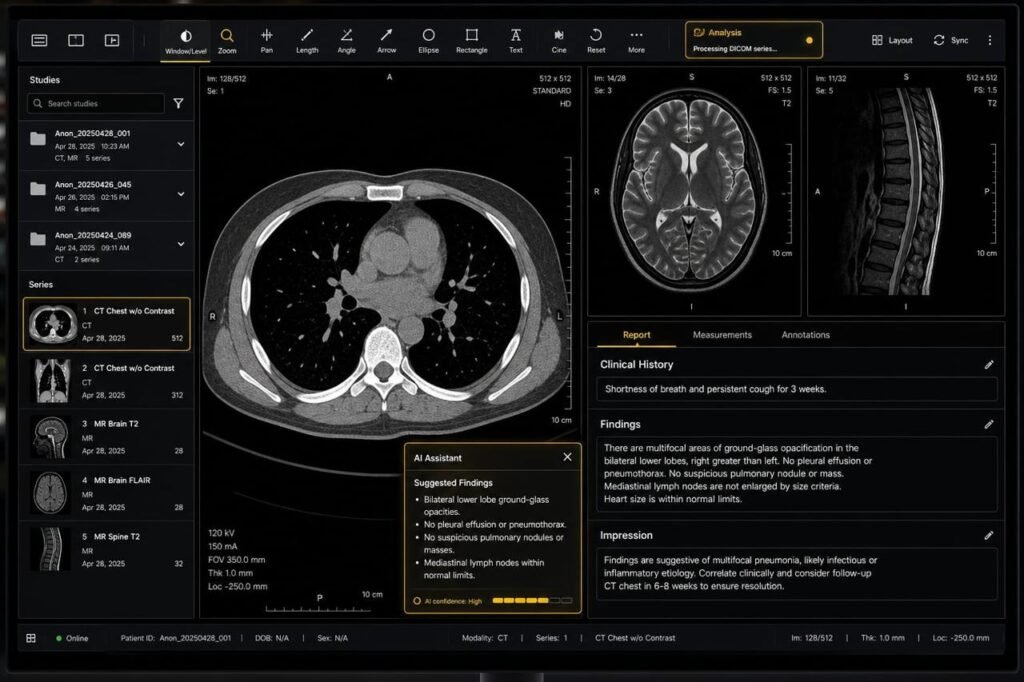
At PYCAD, this is our specialty. We at PYCAD, build custom web DICOM viewers and integrate them into medical imaging web platforms. The result is a fluid, intuitive experience where a specialist can pull up a high-resolution scan directly within the patient’s record, from anywhere with an internet connection. No more data silos. No more frustrating delays.
This level of integration delivers profound benefits:
- Faster Consultations: A radiologist in a major city can instantly review a scan taken at a rural clinic and provide an expert opinion in minutes, not days.
- Coordinated Care: A surgeon can view a pre-operative scan while reviewing the latest lab results and clinical notes—all in one unified screen.
- Empowered Patients: Through secure portals, patients can finally get easy access to their own imaging studies, becoming more active participants in their care.
The demand for this connectivity is fueling massive market growth. The global health data interoperability market is on track to hit USD 84.58 billion, with the EHR segment alone making up 42.2% of that figure. This surge is driven by the undeniable truth that EHRs are the heart of patient data sharing, a reality reinforced by government initiatives pushing for better data exchange to improve outcomes and slash medical errors. You can discover more about these market trends and their drivers.
Our work is a testament to the power of connected imaging. By making visual data as accessible as any other piece of the patient record, we help create a truly complete picture of a person's health. To see these powerful integrations for yourself, please visit our portfolio page.
The Future of Healthcare Is Connected
We're at a pivotal moment in the story of healthcare. The long journey from scattered paper charts to a fluid, interconnected digital ecosystem is more than just a tech upgrade—it's a complete reimagining of how we deliver care. Making electronic health records interoperability a reality is the final, crucial chapter in this story, turning the dream of connected health into a tangible, life-saving tool.
This isn't just a technical puzzle to solve; it's a collective mission. It calls for a shared vision among healthcare leaders, IT teams, clinicians on the front lines, and technology partners. We're all in this together, building a system that's smarter, safer, and ultimately, more human. Every single successful data exchange and every newly integrated system brings us one step closer to better patient outcomes.
A Global Commitment to Connected Care
The push for interoperability isn't happening in a vacuum—it's a worldwide movement. Across the WHO European Region, a staggering 87% of Member States have already implemented a national EHR system, connected regional networks, or a patient portal. This shows a massive, collective lean-in to digital health. Backing this up, 91% of these countries have passed laws to support EHR adoption, placing information sharing right at the top of their strategic goals. You can dive deeper into the WHO's digital health action plan for Europe right here.
Of course, the road isn't without its bumps. A lack of funding is still a major hurdle in at least 37% of countries, a clear sign that continued investment is needed to bridge the gap between policy and practice. The way forward is clear: these systems have to be built for everyone, wrapped in strong privacy protections, and designed from the ground up for seamless data exchange if they're ever going to live up to their promise.
Championing a Future Built on Integration
The future we're all working toward is one where data serves, protects, and empowers. It’s a future where a patient’s full health story is instantly available when and where it matters most, where AI provides insights to help a doctor make a tough call, and where medical images are no longer locked away in isolated systems.
At PYCAD, this is the future we are building today. We at PYCAD, build custom web DICOM viewers and integrate them into medical imaging web platforms, forging the critical connections that clinicians desperately need. Our work ensures that vital imaging data flows freely and becomes an accessible, integrated part of the patient record, not just a forgotten file.
Achieving full electronic health records interoperability is our shared responsibility. It's an inspirational call to action to break down the final barriers preventing data from flowing where it's needed most—to the people who can use it to save lives.
By embracing this mission, we can finally create a healthcare system that is truly greater than the sum of its parts. Every leader who champions this cause contributes to a legacy of better outcomes and more personalized, compassionate care. The tools are here. The path is laid out. It’s time to build the connected future of healthcare, together.
To see how we’re doing our part, feel free to explore our work on our portfolio page.
Answers to Your Top Questions About EHR Interoperability
Diving into EHR interoperability often kicks up a lot of questions. It’s a complex topic, but getting clear on the fundamentals is the best way to move forward with confidence. Let's tackle some of the most common things people ask.
What's the Real Difference Between Syntactic and Semantic Interoperability?
This is a classic question, and probably the most important one to understand. The easiest way to think about it is to compare it to a human conversation.
-
Syntactic interoperability is all about grammar and structure. It means two systems can successfully pass a message back and forth. The data gets from point A to point B without getting garbled. But that’s it. It’s like hearing a sentence in a language you don’t speak—you received the sounds correctly, but you have no idea what they mean.
-
Semantic interoperability is about shared meaning. This is the real goal. It ensures that when one system sends data, the receiving system understands its context and clinical significance perfectly. A code for "myocardial infarction" isn't just a string of characters; it's understood as a "heart attack." This shared understanding is what makes the data truly powerful and safe to use for patient care.
Why Is Everyone Talking About FHIR?
You've probably heard a lot about Fast Healthcare Interoperability Resources, or FHIR, and for good reason. It’s a game-changer compared to older standards like HL7 v2, which were often clunky and rigid.
FHIR was built for the modern internet. It uses the same kind of web-based tools (like RESTful APIs) that power the apps on your phone. Instead of trying to send one giant, complicated message, FHIR breaks down health information into smaller, logical chunks called "Resources." Think of them like Lego blocks—one for the patient, one for a lab result, another for a prescription. This modular approach makes it infinitely easier for developers to build apps and connect systems quickly, especially for mobile and cloud-based tools.
We're Ready to Start. What's the First Move?
It's tempting to try and boil the ocean, but the best first step is always a focused assessment. Take an honest look at your current technology, how data moves (or doesn't move) through your organization, and where your clinicians are hitting the most frustrating roadblocks.
The smartest way forward is to think strategically. Embrace a standards-based approach, make a FHIR-based API strategy your priority, and then pick one high-value project to get a win on the board.
Maybe it's connecting a new patient portal or integrating a diagnostic tool from a key specialist. By starting small and delivering a tangible improvement, you create the momentum and internal support needed to tackle bigger, more ambitious projects that will truly change how you deliver care.
At PYCAD, we live and breathe this stuff. Forging these connections is what we do best. We at PYCAD, build custom web DICOM viewers and integrate them into medical imaging web platforms, turning siloed data into the kind of insight that empowers clinicians. See for yourself—check out our work on our portfolio page.