In a healthcare system where data is the new bedrock of medicine, Electronic Health Records (EHRs) stand as the central nervous system of modern clinical practice. They promise a future of seamless, data-driven, and highly efficient patient care. Yet, for every story of revolutionary success, there's a cautionary tale of crippling implementation costs, clinician burnout, and unforeseen security risks.
This comprehensive roundup moves beyond the surface-level debate. We will dissect the 10 critical dualities of EHRs, exploring not just the 'what', but the 'why' and 'how' behind their profound impact. For healthcare tech stakeholders, from hospital IT directors to medtech innovators, understanding these nuances is not just academic; it’s essential for building a resilient, secure, and truly patient-centric digital health ecosystem. Viewing this process through the lens of modernization as business reinvention is critical; it’s a strategic overhaul, not just a software update.
This article details the specific advantages and disadvantages of electronic health records, providing actionable strategies for maximizing potential while mitigating risks. We will cover everything from clinical workflow impacts and interoperability challenges, including DICOM integration, to the financial and regulatory hurdles you will face. We at PYCAD, build custom web DICOM viewers and integrate them into medical imaging web platforms, a task that directly confronts these EHR dualities. You can see examples of our integration work in our portfolio. Let's delve into the core issues to uncover a clear path forward.
1. Improved Clinical Decision-Making vs. System Dependency and Alert Fatigue
Electronic Health Records (EHRs) stand at a pivotal crossroads, offering unprecedented tools for enhancing patient care while simultaneously introducing new cognitive challenges for clinicians. This duality is one of the most significant advantages and disadvantages of electronic health records, transforming the very nature of clinical decision-making.
At their best, EHRs are a powerhouse of insight. They consolidate a patient's entire medical history, from lab results and imaging studies to past diagnoses and medications, into a single, accessible view. This comprehensive data, paired with sophisticated clinical decision support (CDS) systems, empowers clinicians to make more accurate diagnoses and develop highly effective treatment plans.
However, this reliance on technology creates a significant risk: alert fatigue. When clinicians are bombarded with a constant stream of low-priority notifications, they can become desensitized, potentially overlooking a critical warning that could prevent a serious adverse event. The challenge is not just to provide data, but to present it intelligently.
Real-World Impact: From Overload to Optimization
Success stories prove that balancing this equation is possible. The Mayo Clinic, for instance, leveraged advanced EHR analytics to reduce medication errors by an astounding 30%, not by adding more alerts but by using machine learning to prioritize them. Similarly, initial Epic Systems implementations have demonstrated a 15-25% reduction in adverse patient events when their alert systems are meticulously calibrated to the specific clinical environment.
Key Insight: The goal isn't just to implement a system, but to cultivate a symbiotic relationship between clinician and technology, where the EHR serves as an intelligent co-pilot, not a distracting backseat driver.
Actionable Strategies for Mitigation
To harness the power of EHRs without succumbing to their pitfalls, a proactive and strategic approach is essential:
- Implement Intelligent Alerting: Utilize machine learning algorithms to filter, prioritize, and personalize alerts based on patient context and clinical specialty. This ensures that the most critical information always rises to the top.
- Conduct Regular Audits: Routinely review and decommission low-value or redundant notifications. Treat your alert system like a garden that needs consistent weeding to thrive.
- Empower Clinician Judgment: Establish clear, documented protocols that allow clinicians to safely override non-critical alerts, trusting their professional expertise while maintaining accountability.
- Integrate Custom Solutions: We at PYCAD, build custom web DICOM viewers and integrate them into medical imaging web platforms, which can be tailored to provide context-specific, intelligent alerts. This deep integration, as seen in our portfolio, ensures systems work for clinicians, not against them. Learn more about how these integrated tools are revolutionizing healthcare by exploring this detailed guide on what a clinical decision support system is.
2. Enhanced Data Accessibility and Interoperability vs. Security Vulnerabilities and Privacy Risks
The ability to share patient information seamlessly across different care settings represents a monumental leap forward, yet it simultaneously opens a Pandora's box of security and privacy challenges. This trade-off between accessibility and vulnerability is a core theme when analyzing the advantages and disadvantages of electronic health records, defining the digital tightrope that modern healthcare must walk.
On one hand, EHRs break down the information silos that have long plagued healthcare. They enable a patient’s data, from primary care notes to specialized diagnostic images, to follow them across hospitals, clinics, and labs. This interoperability improves care coordination, reduces redundant and costly testing, and provides a holistic view of patient health, which is critical for accurate diagnoses and effective treatment in emergencies.

However, this interconnected digital ecosystem creates an expanded attack surface. Centralized patient records become high-value targets for cybercriminals, as demonstrated by the devastating 2021 Universal Health Services breach that crippled over 400 facilities. A single vulnerability in a shared EHR network can lead to catastrophic data loss, violating patient trust and running afoul of strict HIPAA and GDPR regulations.
Real-World Impact: From Vulnerability to Resilience
The stakes are incredibly high, but leading institutions show that a secure, interoperable future is achievable. The Cleveland Clinic, for instance, implemented a zero-trust security architecture combined with secure FHIR APIs, reportedly reducing their risk of a data breach by an impressive 85%. This proactive approach proves that robust security and fluid data exchange are not mutually exclusive goals but are two sides of the same coin.
Key Insight: True interoperability cannot exist without impenetrable security. The goal is to build digital bridges for data, not highways for threats, ensuring that patient information is both accessible to clinicians and inaccessible to adversaries.
Actionable Strategies for Mitigation
To achieve this balance, healthcare organizations must adopt a security-first mindset and implement a multi-layered defense strategy:
- Adopt a Zero-Trust Architecture: Operate on the principle of "never trust, always verify." Every access request to the EHR, regardless of its origin, must be strictly authenticated and authorized.
- Prioritize Endpoint and Data Encryption: Use advanced encryption for all patient data, both in transit and at rest. Given the significant risks, understanding what is SOC 2 compliance is paramount for building and maintaining trust.
- Conduct Rigorous Security Audits: Implement quarterly penetration testing and continuous vulnerability assessments to identify and patch security gaps before they can be exploited.
- Empower and Train Staff: Your team is the first line of defense. Conduct regular, mandatory training on cybersecurity best practices, phishing detection, and incident response protocols.
- Build with Security in Mind: We at PYCAD, build custom web DICOM viewers and integrate them into medical imaging web platforms with security as a foundational element, as seen in our portfolio. By baking in features like multi-factor authentication and granular access controls, we ensure our solutions enhance accessibility without compromising security.
3. Streamlined Administrative Workflows vs. Implementation Complexity and Transition Disruption
One of the most profound advantages and disadvantages of electronic health records lies in the operational transformation they promise versus the upheaval they cause. EHRs are designed to be the central nervous system of a healthcare facility, automating billing, streamlining scheduling, and digitizing documentation to slash administrative overhead and boost efficiency.
In an ideal state, these systems free up valuable clinical time and reduce the human error inherent in manual processes. The potential to connect patient registration directly to billing and clinical notes to follow-up appointments creates a seamless operational flow, allowing providers to focus on care rather than paperwork.
However, the path to this efficiency is fraught with complexity. Implementing an EHR is not a simple software installation; it is a fundamental organizational overhaul. It demands immense investment in time, capital, and training, often leading to significant, albeit temporary, disruptions in productivity and intense staff resistance as established routines are dismantled.
Real-World Impact: From Transition Pain to Long-Term Gain
The journey from manual to digital is a marathon, not a sprint. Stanford Health's four-year, $500 million+ implementation of Epic saw major productivity dips before its powerful efficiencies were realized. On a smaller scale, a rural Massachusetts clinic reported an initial 35% productivity loss during its eight-month transition, but this short-term pain led to a remarkable 40% efficiency gain within two years. These cases underscore a critical truth: disruption is inevitable, but strategic management can turn it into a launchpad for unprecedented growth.
Key Insight: The goal of an EHR implementation is not just to survive the transition but to architect it for success, viewing the initial disruption as a planned investment toward a more efficient and resilient future.
Actionable Strategies for Mitigation
Navigating the turbulent waters of an EHR rollout requires meticulous planning and a people-first mindset. Success depends on mitigating disruption and fostering adoption:
- Phase the Rollout: Instead of a "big bang" launch, implement the EHR department by department. This compartmentalizes challenges and allows for iterative learning.
- Establish 'Super-User' Champions: Identify and train tech-savvy staff members to act as internal peer trainers and advocates. Their enthusiasm and expertise can significantly ease the transition for colleagues.
- Maintain Parallel Systems: For a limited period (e.g., 2-3 months), run the old and new systems concurrently. This provides a safety net and reduces the anxiety associated with a hard cutoff.
- Plan for a Productivity Buffer: Acknowledge and plan for a temporary 20-30% drop in productivity. Adjust schedules and patient loads accordingly to prevent staff burnout and maintain care quality.
- Customize Workflows Pre-Launch: We at PYCAD, build custom web DICOM viewers and integrate them into medical imaging web platforms, allowing workflows to be tailored before they go live. This proactive approach, visible in our portfolio, minimizes post-launch friction and ensures the system aligns with clinical needs from day one.
4. Cost Reduction Through Operational Efficiency vs. High Initial Capital and Ongoing Costs
The financial implications of EHR adoption represent one of the most critical and debated advantages and disadvantages of electronic health records. While these systems promise substantial long-term savings by streamlining operations, the immense initial investment and ongoing maintenance costs present a formidable barrier for many healthcare organizations.
On one hand, EHRs are powerful engines of financial efficiency. By digitizing records, they dramatically reduce the costs associated with paper, printing, and physical storage. More importantly, they optimize clinical workflows, eliminate redundant testing through better data access, and improve billing accuracy, leading to significant operational savings over time.
However, the path to this ROI is paved with steep upfront expenses. These include software licensing fees, robust hardware infrastructure, extensive staff training, and system customization. This financial hurdle can be particularly challenging for smaller clinics or rural hospitals, making the long-term benefits seem distant and unattainable.
Real-World Impact: From Investment to Return
The long-term value proposition is proven by organizations that navigate this initial financial challenge. Mass General Brigham invested over $700 million in their integrated EHR but reported over $200 million in annual savings within five years. On a smaller scale, a rural clinic network that adopted a cloud-based EHR for an initial $150,000 cost achieved break-even in just four years by improving billing efficiency and reducing administrative overhead.
Key Insight: The financial narrative of an EHR is not a one-time expense but a long-term investment strategy. Success hinges on looking beyond the initial sticker shock to calculate the total cost of ownership against projected operational gains.
Actionable Strategies for Mitigation
To balance the high costs with long-term savings, healthcare organizations can adopt several strategic financial approaches:
- Embrace Cloud-Based Solutions: Opt for cloud-based EHRs to minimize upfront hardware and infrastructure costs, converting a large capital expenditure into a more manageable operational expense.
- Explore Group Purchasing: Smaller organizations can partner to form a purchasing coalition, leveraging their collective size to negotiate more favorable licensing terms and discounts from vendors.
- Phase the Implementation: Roll out the EHR system in stages across different departments. This approach spreads the financial impact over multiple budget cycles and allows for lessons learned in early phases to optimize later ones.
- Negotiate and Customize Smartly: We at PYCAD, build custom web DICOM viewers and integrate them into medical imaging web platforms. This can be a more cost-effective way to enhance specific workflows without a full system overhaul. Our work, detailed in our portfolio, demonstrates how targeted integrations deliver high ROI.
5. Improved Patient Safety and Reduced Medical Errors vs. System Failures and Unforeseen Clinical Risks
The promise of enhanced patient safety is a core driver of EHR adoption, yet this powerful advantage comes with a stark counterpoint: the risk of new, technology-induced errors. This critical trade-off is central to understanding the true advantages and disadvantages of electronic health records and requires a vigilant, human-centered approach to system design and implementation.
On one hand, EHRs are proven safety powerhouses. Features like Computerized Physician Order Entry (CPOE) and automated drug interaction checks drastically cut down on preventable errors. By providing a complete, legible patient history, they help clinicians avoid missed diagnoses and adverse events, creating a more reliable safety net than any paper-based system could offer.
However, the very systems designed to protect patients can introduce novel risks. Software glitches, poorly designed workflows, or system downtime can lead to catastrophic failures. Clinicians may develop workarounds to cumbersome interfaces, unintentionally bypassing safety checks and creating unforeseen hazards that can lead to patient harm.
Real-World Impact: From Catastrophe to Correction
The healthcare industry is filled with examples that highlight this delicate balance. Boston Medical Center famously documented a 48% reduction in medication errors within two years of its CPOE implementation. Similarly, the VA's comprehensive EHR has been credited with a 30-40% reduction in adverse events across its network by leveraging robust, integrated safety features.
Conversely, a tragic case at Vanderbilt University Medical Center, where a confusing EHR interface contributed to a fatal medication overdose, served as a powerful wake-up call. This incident spurred a complete system redesign, incorporating human factors engineering and raising industry-wide awareness about the critical need to design for safety, not just for function.
Key Insight: True patient safety is not achieved by simply deploying technology. It is cultivated through a continuous cycle of designing, testing, monitoring, and refining systems to ensure they support, rather than hinder, safe clinical practice.
Actionable Strategies for Mitigation
To maximize safety gains while minimizing technological risks, healthcare organizations must adopt a proactive, multi-layered strategy:
- Implement Rigorous Testing Protocols: Conduct comprehensive end-to-end testing in simulated clinical environments before any system goes live. This includes stress-testing for software bugs and validating that workflows are intuitive and safe.
- Establish an EHR Safety Review Committee: Create a dedicated, multidisciplinary team to continuously monitor for, investigate, and respond to any EHR-related adverse events or near misses.
- Design with Human Factors in Mind: Collaborate with clinical end-users to design workflows that are logical, efficient, and minimize cognitive load, reducing the likelihood of workarounds and errors.
- Ensure Data Integrity: We at PYCAD, build custom web DICOM viewers and integrate them into medical imaging web platforms, ensuring that critical imaging data flows securely and without error into the patient record. This seamless integration, visible in our portfolio, prevents data corruption that could lead to diagnostic mistakes.
6. Enhanced Clinical Documentation Quality vs. Documentation Burden and Copy-Paste Abuse
The transition to digital records promised a new era of clarity and precision in clinical documentation, yet it has also introduced significant workflow challenges. This contrast between documentation quality and the burden of its creation is a core aspect of the advantages and disadvantages of electronic health records, directly impacting clinician satisfaction and patient care.
EHRs offer tools for creating comprehensive, legible, and structured clinical notes, a vast improvement over often illegible handwritten records. This structured data is invaluable for analytics, quality reporting, and continuity of care. It provides a clear, chronological narrative of a patient's health journey that can be easily shared and interpreted by different specialists.

However, the reality is that documentation requirements can be overwhelming. A Stanford University study revealed that physicians spend nearly half of their office visit time on EHR work. This immense clerical burden leads to shortcuts, most notoriously the practice of copy-pasting previous notes, which can perpetuate errors and create bloated, inaccurate records known as 'note bloat'.
Real-World Impact: From Burden to Breakthrough
Forward-thinking institutions are tackling this problem head-on. Massachusetts General Hospital successfully reduced documentation time by 30% by integrating advanced voice-to-text capabilities and intelligent, specialty-specific templates. Similarly, vendors are responding; Epic's recent updates include AI-powered assistance that has been shown to reduce clinician documentation burden by an impressive 25-35%, transforming a tedious task into a streamlined process.
Key Insight: The ultimate goal is to make documentation a natural byproduct of excellent clinical care, not a separate, time-consuming administrative task that detracts from it.
Actionable Strategies for Mitigation
To restore the balance between comprehensive documentation and clinician efficiency, healthcare organizations must adopt intelligent, human-centered strategies:
- Embrace AI and Voice Recognition: Implement modern voice-to-text and AI-assisted documentation tools to auto-populate routine information and convert spoken observations into structured text, dramatically reducing typing.
- Develop Smart Templates: Create and maintain specialty-specific templates that minimize repetitive data entry and guide clinicians to capture the most relevant information efficiently.
- Establish Clear Copy-Paste Policies: Implement and enforce strict governance around the copy-paste function, restricting its use to appropriate contexts and requiring verification of all copied information to prevent the propagation of errors.
- Integrate Imaging Data Seamlessly: We at PYCAD, build custom web DICOM viewers and integrate them into medical imaging web platforms. This allows for AI-powered assistance in documenting findings directly from medical images, ensuring accuracy and saving time. Explore our innovative solutions in our portfolio.
7. Comprehensive Data Analytics and Population Health Insights vs. Data Quality Issues and Analytical Limitations
Electronic Health Records are more than digital filing cabinets; they are vast repositories of data that hold the key to transforming healthcare from a reactive to a proactive discipline. This duality presents one of the most exciting yet challenging advantages and disadvantages of electronic health records, pitting the promise of population-level insights against the practical hurdles of data integrity.
At their peak potential, EHRs fuel powerful analytics engines. They enable healthcare organizations to identify at-risk populations, predict disease outbreaks, and pioneer precision medicine initiatives by analyzing aggregated patient data. This macro-level view allows for strategic interventions that can improve community health outcomes and reduce long-term costs.
However, the axiom "garbage in, garbage out" has never been more relevant. The immense value of EHR data is entirely dependent on its quality. Inconsistent coding, incomplete entries, and a lack of data standardization can corrupt analytical models, leading to flawed conclusions and misguided clinical strategies. The challenge lies in ensuring the data's foundational integrity.
Real-World Impact: From Flawed Data to Predictive Power
The potential for impact is monumental. Kaiser Permanente leverages its integrated EHR data to manage population health, successfully identifying high-risk diabetic patients for early intervention and reducing complication rates. During the COVID-19 pandemic, real-time EHR data was crucial for surveillance, though initial responses were hampered by data quality variations across different systems. Similarly, the Mayo Clinic uses its analytics to identify rare disease cohorts, dramatically improving diagnostic accuracy.
Key Insight: The future of medicine isn't just about treating individual patients; it's about understanding the health of entire populations. High-quality EHR data is the bedrock upon which that future will be built.
Actionable Strategies for Mitigation
To unlock the analytical power of EHRs, organizations must prioritize data quality with the same rigor as clinical care:
- Establish Robust Data Governance: Implement clear policies for data entry, quality monitoring, and validation. Create standardized data dictionaries using vocabularies like SNOMED-CT and LOINC to ensure consistency.
- Implement Validation at the Source: Configure EHR systems with validation rules that check data quality during entry, not just in post-hoc analysis. This prevents errors before they contaminate the dataset.
- Train and Empower Staff: Educate clinical staff on the critical importance of accurate and consistent data entry for both individual care and broader research initiatives.
- Validate Medical Imaging Data: We at PYCAD, build custom web DICOM viewers and integrate them into medical imaging web platforms with AI solutions to validate data and DICOM metadata quality, ensuring analytics are built on a solid foundation. This deep integration, showcased in our portfolio, is essential for reliable research. Discover more about achieving this standard in our guide to data quality in healthcare.
8. Seamless Care Coordination and Continuity vs. Fragmentation and Interoperability Barriers
The promise of Electronic Health Records (EHRs) is a truly connected healthcare ecosystem, where patient data flows seamlessly between providers to create a tapestry of continuous, coordinated care. However, the reality often falls short, presenting one of the most critical advantages and disadvantages of electronic health records: the chasm between idealized continuity and fragmented, siloed data.
At its best, a fully interoperable EHR network allows a primary care physician, a specialist, and an emergency room doctor to access the same, up-to-date patient information. This shared visibility prevents redundant tests, reduces medication errors, and ensures smoother, safer transitions of care, especially for patients with chronic conditions.
The disadvantage emerges when disparate, proprietary EHR systems cannot communicate. This lack of interoperability creates dangerous information gaps, forcing clinicians to make decisions with an incomplete picture. Patients are often burdened with becoming the primary carriers of their own medical history, a responsibility fraught with potential for error and confusion.
Real-World Impact: From Silos to Synergy
The journey toward true interoperability is challenging, but the rewards are transformative. NewYork-Presbyterian demonstrated this by integrating its EHR across all facilities, leading to a remarkable 35% improvement in care transitions. Similarly, regional efforts like the Massachusetts Health Information Highway (MAHIH) now enable data sharing across hundreds of care sites, breaking down long-standing barriers. The COVID-19 pandemic, while highlighting persistent gaps, also acted as a catalyst, accelerating the adoption of Health Information Exchanges (HIEs) out of sheer necessity.
Key Insight: Interoperability is not merely a technical challenge; it is a fundamental pillar of patient-centered care. The goal is to build digital bridges that allow data to follow the patient, ensuring every provider has the context needed to deliver the best possible outcome.
Actionable Strategies for Mitigation
To overcome fragmentation and foster seamless care coordination, healthcare organizations must adopt a multi-pronged strategy:
- Adopt FHIR-Based APIs: Standardize on Fast Healthcare Interoperability Resources (FHIR) to enable robust, modern, and flexible data exchange between different EHR systems and applications.
- Participate in Health Information Exchanges (HIEs): Actively engage with regional HIEs to facilitate secure sharing of clinical information across a broader network of providers, improving community-wide health outcomes.
- Establish Data Sharing Workflows: Create standardized protocols and clear agreements with key referral partners to ensure consistent and reliable data transfer during patient handoffs.
- Integrate Specialized Solutions: We at PYCAD, build custom web DICOM viewers and integrate them into medical imaging web platforms. This ensures that vital imaging data is not trapped in a silo and can be shared seamlessly across different systems. See examples of our integration work in our portfolio.
9. Telemedicine Enablement and Remote Care Expansion vs. Technology Divide and Digital Health Disparities
The integration of EHRs with telehealth platforms has catalyzed a revolution in remote care, dramatically expanding access and convenience for countless patients. This fusion represents one of the most transformative advantages and disadvantages of electronic health records, creating a new frontier for healthcare delivery while simultaneously exposing deep-seated digital inequities.
On one hand, EHR-enabled telemedicine breaks down geographical and mobility barriers. A rural patient can consult a specialist hundreds of miles away, and an elderly individual with limited mobility can receive chronic care management from their living room. This seamless flow of data from the EHR to a virtual visit platform supports continuity of care and empowers providers with a patient's full history during remote consultations.
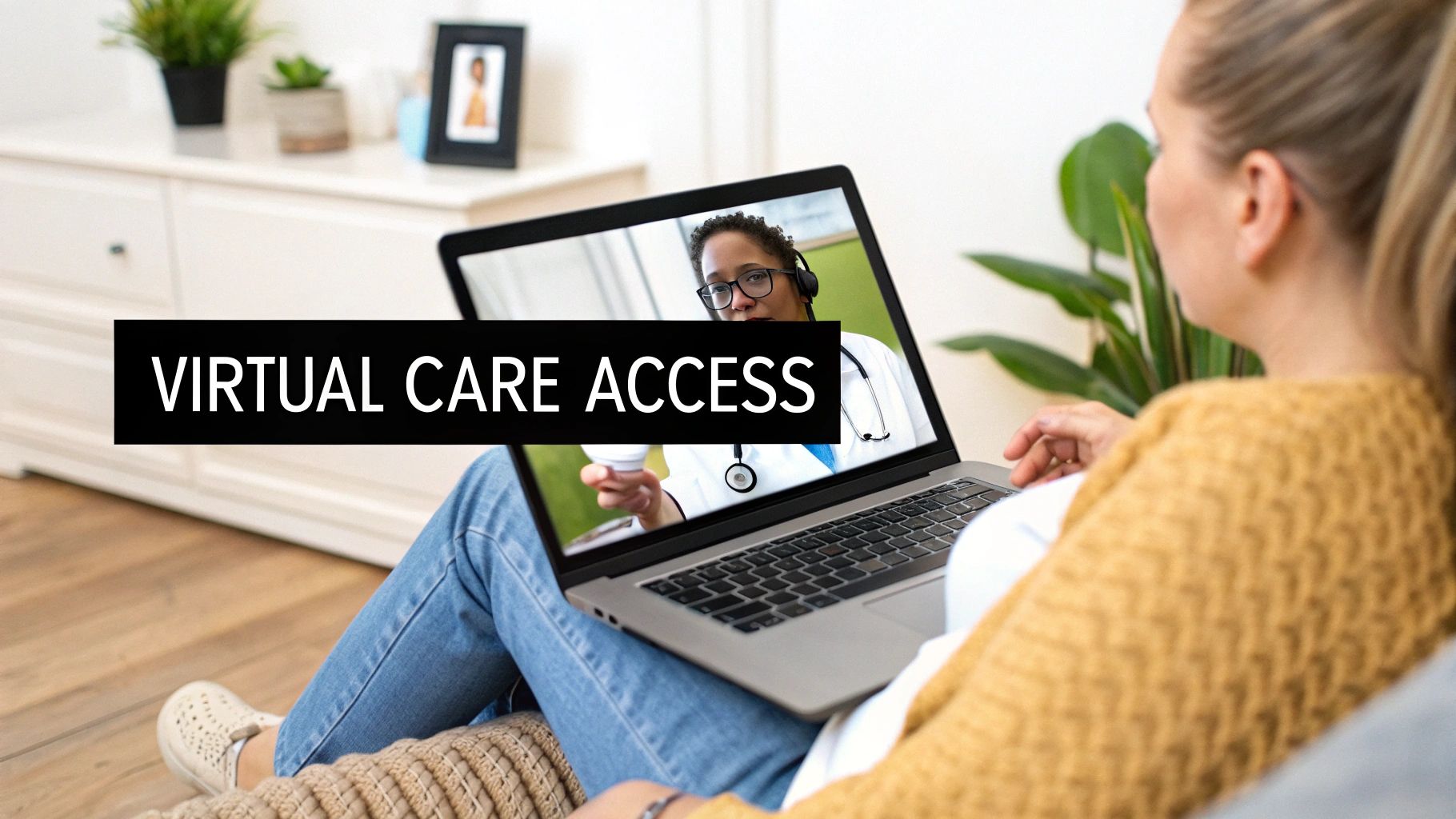
However, this digital-first approach risks leaving vulnerable populations behind. The technology divide, characterized by a lack of reliable internet, insufficient digital literacy, or no access to appropriate devices, creates a chasm in healthcare access. If a patient cannot navigate a portal or afford broadband, the promise of virtual care remains an illusion.
Real-World Impact: Bridging Access and Acknowledging Gaps
The COVID-19 pandemic accelerated this shift, showcasing both its potential and its pitfalls. The U.S. Department of Veterans Affairs expanded telehealth visits from 46,000 to 1.7 million but also identified significant access disparities among its population. Similarly, studies at major academic medical centers found that African American and Hispanic patients utilized telehealth at rates 40% lower than their white counterparts, highlighting a critical equity challenge that must be addressed.
Key Insight: True healthcare innovation isn't just about launching new technology; it's about ensuring that technology serves everyone equitably, bridging gaps instead of widening them.
Actionable Strategies for Mitigation
To ensure telemedicine promotes health equity, healthcare organizations must build a digital front door that is open to all:
- Offer Multi-Modal Access: Provide telehealth services across various platforms, including web portals, mobile apps, and even audio-only phone calls to accommodate different levels of technological access.
- Invest in Digital Literacy: Partner with community organizations to offer training programs for patients, particularly older adults, on how to use patient portals and telehealth tools effectively.
- Document Access Barriers: Use the EHR to document a patient’s digital literacy and access limitations, allowing care teams to tailor their communication and outreach strategies accordingly.
- Integrate Supportive Technologies: We at PYCAD, build custom web DICOM viewers that can be seamlessly integrated into telehealth platforms, allowing specialists to review critical imaging remotely. This deep integration, showcased in our portfolio, ensures that high-quality diagnostic capabilities are not lost in the transition to virtual care.
10. Regulatory Compliance and Audit Trail Capabilities vs. Regulatory Burden and Compliance Complexity
Electronic Health Records (EHRs) operate within a complex web of regulations, acting as both a powerful tool for compliance and a source of significant administrative burden. This dual role represents one of the most critical advantages and disadvantages of electronic health records, forcing healthcare organizations to master a landscape of ever-changing rules.
On one hand, EHRs are a compliance officer's greatest asset. They provide immutable, timestamped audit trails that meticulously log every access, view, and modification of patient data. This capability makes it vastly easier to demonstrate HIPAA and HITECH compliance, respond to audits from bodies like the HHS Office for Civil Rights (OCR), and prove adherence to Medicare and Medicaid standards.
However, the very regulations EHRs help enforce also create immense complexity. Navigating the patchwork of federal laws, state-specific privacy rules, and international standards like GDPR requires dedicated expertise and significant resources. The constant need for system updates and certifications to meet evolving requirements can be a major challenge for IT departments.
Real-World Impact: From Overload to Optimization
The consequences of non-compliance are severe. In 2022 alone, the OCR issued over $20 million in settlements for documented HIPAA violations, many of which stemmed from inadequate EHR access controls or audit failures. For example, Baptist Health System faced a significant settlement for access control deficiencies, highlighting how critical proper EHR configuration is. Conversely, a well-managed EHR can turn compliance from a reactive chore into a proactive strategy, using built-in analytics to flag potential breaches before they escalate.
Key Insight: The ultimate goal is to transform the EHR from a mere record-keeping system into a dynamic compliance engine, one that actively protects patient data and shields the organization from regulatory risk.
Actionable Strategies for Mitigation
To leverage the compliance power of EHRs while mitigating the regulatory burden, a structured and vigilant approach is necessary:
- Establish a Dedicated Compliance Team: Appoint a compliance officer or department responsible for monitoring regulatory changes from the FDA, CMS, OCR, and other bodies.
- Conduct Annual Risk Assessments: Proactively perform regular audits of EHR access logs, security protocols, and data handling procedures to identify and remediate vulnerabilities.
- Maintain Rigorous Documentation: Keep detailed records of all compliance activities, staff training sessions, and Business Associate Agreements with vendors and partners.
- Integrate Custom Solutions: We at PYCAD, build custom web DICOM viewers and integrate them into medical imaging web platforms. As detailed in our portfolio, these solutions can be designed with compliance at their core, ensuring every data interaction meets regulatory standards. Learn more about navigating these complexities in our guide to AI regulatory compliance in healthcare.
EHR Pros & Cons — 10-Point Comparison
| Topic | Implementation Complexity 🔄 | Resource & Cost Requirements ⚡ | Expected Outcomes ⭐📊 | Ideal Use Cases 💡 | Key Advantages ⭐ |
|---|---|---|---|---|---|
| Improved Clinical Decision-Making vs. System Dependency and Alert Fatigue | Moderate–High: integrate CDS, ML alert tuning, workflow mapping | Moderate: analytics, clinical content, ongoing tuning and governance | ✅ Higher diagnostic accuracy and reduced med errors; ⚠️ risk of alert fatigue if poorly tuned | Specialty care, EDs, high-acuity wards needing decision support | Faster evidence-based decisions; risk stratification; reduced errors |
| Enhanced Data Accessibility & Interoperability vs. Security & Privacy Risks | High: implement FHIR/HL7, HIEs, API integrations | High: encryption, zero-trust, audits, pen testing, cloud infra | ✅ Improved care coordination and fewer duplicates; ⚠️ higher breach exposure if insecure | Multi‑site systems, cross‑provider care, telemedicine networks | Seamless data exchange; emergency access; supports analytics |
| Streamlined Administrative Workflows vs. Transition Disruption | High: lengthy rollouts, change management, phased deployments | High upfront: licenses, customization, extensive staff training | ✅ Reduced billing errors and faster claims after stabilization; initial productivity dip | Large hospitals, networks seeking revenue-cycle optimization | Automates billing/scheduling; reduces admin workload |
| Cost Reduction Through Operational Efficiency vs. High Initial & Ongoing Costs | Moderate: phased implementation and financial modeling | Very High upfront; ROI typically 3–5+ years; ongoing maintenance costs | ✅ Long‑term savings and improved resource use; variable ROI for small practices | Mid‑to‑large hospitals, systems with scale to amortize costs | Lower operating costs over time; fewer duplicate tests |
| Improved Patient Safety & Reduced Medical Errors vs. System Failures | Moderate–High: CPOE, BCMA, human‑factors testing required | Moderate: safety committees, testing, training, monitoring | ✅ Significant reductions in med errors/adverse events; ⚠️ new EHR‑related error types possible | Inpatient settings, ICUs, pediatrics, high‑risk specialties | CPOE, interaction checks, barcode safety; better documentation |
| Enhanced Clinical Documentation Quality vs. Documentation Burden | Low–Moderate: templates, voice/AI tools, governance to limit copy‑paste | Moderate: transcription/AI services, training, audit tools | ✅ Improved legibility and structured data; ⚠️ increased clinician time and note bloat risk | Outpatient clinics, research centers needing structured notes | Standardized notes for analytics; faster routine documentation |
| Comprehensive Data Analytics & Population Health Insights vs. Data Quality Limits | High: data warehousing, ML pipelines, governance, ETL | High: data scientists, ETL tools, validation, ongoing cleaning | ✅ Predictive risk identification and population management; ⚠️ limited by poor data quality | Integrated delivery networks, public health, research institutions | Enables precision medicine and targeted interventions |
| Seamless Care Coordination & Continuity vs. Fragmentation & Vendor Silos | Moderate–High: HIEs, API agreements, cross‑organization workflows | Moderate: API development, HIE participation fees, governance | ✅ Reduced readmissions, fewer duplicate tests; ⚠️ hindered by vendor incompatibility | Regional systems, transition‑of‑care programs, referral networks | Better transitions of care; robust med reconciliation |
| Telemedicine Enablement & Remote Care Expansion vs. Digital Divide | Low–Moderate: integrate video/RPM, portal UX, multi‑platform access | Moderate: telehealth platforms, RPM devices, patient support programs | ✅ Expanded access and convenience; ⚠️ equity gaps from broadband/device limits | Rural care, mobility‑limited patients, chronic disease follow‑up | Increased access, lower per‑visit costs, remote monitoring |
| Regulatory Compliance & Audit Trail Capabilities vs. Compliance Burden | Moderate–High: audit logging, retention policies, BAAs, policy updates | High ongoing: compliance staff, legal review, certification updates | ✅ Stronger auditability and reduced violation exposure if maintained; ⚠️ costly and complex to sustain | Any PHI‑handling organization; multinational providers | Comprehensive audit trails; automated compliance reporting |
Building the Future of Health IT: Turning Challenges into Opportunities
The journey through the landscape of Electronic Health Records is far more than a simple exercise in weighing pros against cons. As we've explored, the advantages and disadvantages of electronic health records are not opposing forces but two sides of the same coin, representing a dynamic spectrum of opportunity. The path to digital health transformation isn't about finding a perfect, off-the-shelf system; it's about a continuous, strategic commitment to optimization, innovation, and human-centered design. Every challenge, from alert fatigue to interoperability roadblocks, is a signal pointing us toward a more intelligent, secure, and connected future.
The ultimate value of an EHR lies not in its mere existence but in its intelligent application. The promise of enhanced clinical decision-making is only realized when we actively combat system dependency with thoughtful clinical workflow integration. Similarly, the goal of streamlined administrative tasks is only achieved when we proactively manage the complexities of implementation with robust change management and training. It's a call to action for every healthcare stakeholder: to move beyond passive adoption and become active architects of a better system.
Key Takeaways: A Blueprint for Action
Reflecting on the detailed analysis of EHR systems, several core principles emerge as non-negotiable pillars for success. These are the strategic imperatives that turn potential into performance:
- Human-Centered Design is Paramount: The most significant friction points, including documentation burden and usability frustrations, stem from systems designed around data entry rather than patient care. The future belongs to EHRs that prioritize intuitive interfaces, minimize cognitive load, and seamlessly integrate into the natural flow of clinical work.
- Interoperability is the Bedrock of Modern Healthcare: A siloed EHR is a missed opportunity. True care coordination, advanced analytics, and the integration of specialized technologies like medical imaging depend entirely on the free and secure flow of data. This requires a commitment to standards like FHIR and robust integration strategies for complex data types, including DICOM.
- Security is an Unwavering Commitment: As we unlock the power of accessible data, we must concurrently fortify our defenses against ever-evolving cybersecurity threats. A proactive, multi-layered security posture is not an add-on; it is foundational to building and maintaining patient trust.
From Challenge to Innovation: The Path Forward
The true power of this discussion lies in transforming insight into action. For healthcare organizations, medtech innovators, and IT departments, the next steps are clear. It's about asking the right questions: How can we customize our EHR to reduce clicks and eliminate redundant tasks? How can we build secure, API-driven bridges to external platforms, such as specialized imaging archives or remote monitoring tools? How can we leverage our data not just for reporting but for predictive analytics that improve patient outcomes?
This is precisely where the role of specialized integrators and developers becomes critical. The limitations of a standard EHR installation are not an endpoint but a starting point for innovation. For instance, addressing the challenge of integrating high-resolution medical images directly into the patient record often requires more than a standard plugin. It demands a custom solution built for performance and security.
Key Insight: The future of health IT will be defined not by monolithic, one-size-fits-all EHRs, but by a flexible, interconnected ecosystem of specialized tools built around a secure and interoperable data core.
This is the mission that drives us at PYCAD. We see the interoperability gaps and usability challenges discussed throughout this article as our primary field of innovation. We at PYCAD, build custom web DICOM viewers and integrate them into medical imaging web platforms. By focusing on these specialized, high-stakes integrations, we help healthcare organizations unlock the full diagnostic and analytical power of their data, transforming the EHR from a simple record-keeping tool into a dynamic hub of clinical intelligence. We invite you to see how custom-built solutions can elevate your digital health strategy by exploring our work. Visit our portfolio at https://pycad.co/portfolio and let us help you build the future of connected care.
Ready to overcome the interoperability and data visualization challenges within your EHR? At PYCAD, we specialize in developing custom web DICOM viewers and integrating them into complex healthcare platforms, turning your system's disadvantages into powerful, actionable advantages. Discover how a tailored solution can revolutionize your clinical workflows by visiting us at PYCAD today.