
Imagine a world where your most critical patient data—every MRI, CT scan, and pathology slide—is trapped in digital vaults, each with a different key from a different vendor. A Vendor Neutral Archive (VNA) is the universal key that unlocks all of it, creating a single, accessible source of truth. This liberates your information from proprietary silos and paves the way for a truly connected healthcare future.
The Future of Connected Medical Imaging
In far too many healthcare organizations, a patient's imaging history is a puzzle scattered across multiple, incompatible systems. A cardiology image might live in one vendor's Picture Archiving and Communication System (PACS), while a radiology scan is stuck in another. This fractured reality sabotages collaboration, complicates diagnostics, and locks institutions into expensive, inflexible contracts. The root of the problem is data ownership; when data is chained to a specific vendor's software, you lose control.
A VNA completely flips this model. It acts as a central repository that ingests, standardizes, and stores medical images from any source, no matter the vendor. Don't just think of it as storage; think of it as a strategic data liberation platform. This approach guarantees that your organization's most valuable asset—its clinical data—remains independent, secure, and accessible for the long haul.
Breaking Free from Vendor Lock-In
Moving toward a vendor neutral archive isn't just a trend; it's a strategic necessity for modern healthcare IT. By separating the storage of images from the software used to view them, organizations unlock incredible flexibility.
This model delivers some powerful advantages:
- True Data Ownership: Your organization holds the keys to its imaging data, ending the dependency on any single application vendor.
- Simplified Data Migration: Ready to switch PACS viewers? The data doesn't have to move. You just plug the new viewer into the VNA, slashing migration costs and complexity.
- Enhanced Interoperability: A VNA creates a unified data layer, making it much easier to share information between departments and even with other healthcare systems. You can learn more about how this works by exploring our guide on data interoperability in healthcare.
A Vendor Neutral Archive transforms your data from a siloed liability into a strategic, enterprise-wide asset. It’s the foundational step toward building an agile, future-proof imaging ecosystem.
This shift isn't just happening—it's accelerating. The global VNA market is projected to skyrocket from USD 3.3 billion in 2025 to USD 11.5 billion by 2035, a clear sign of the urgent need to dismantle the silos built by legacy systems.
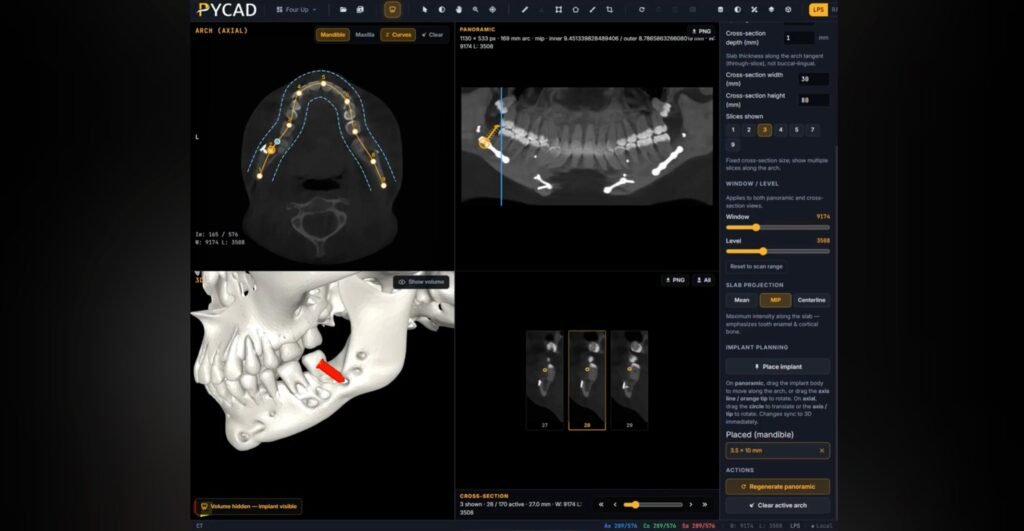
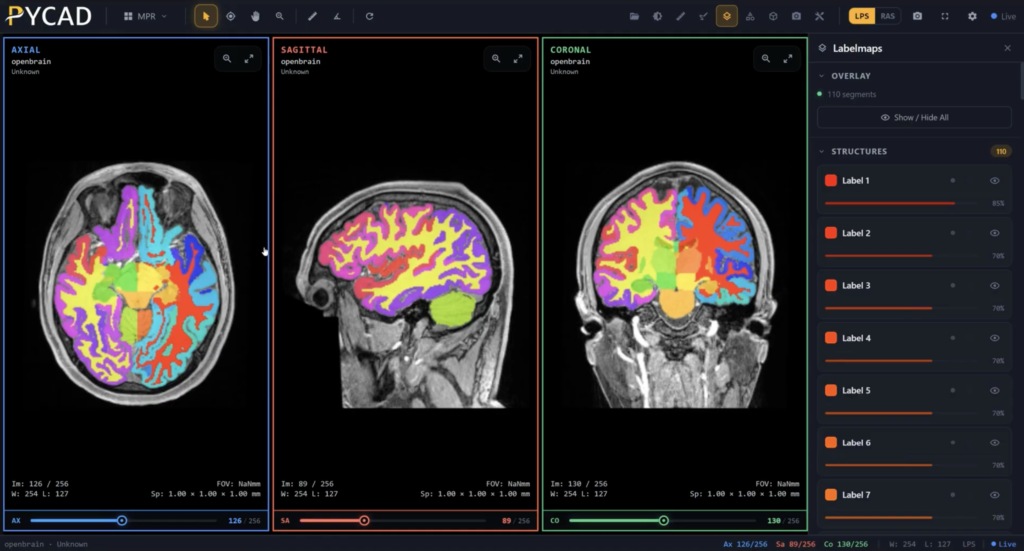
At PYCAD, we're building for this future. We create custom web DICOM viewers that connect seamlessly to VNAs, bringing your newly liberated data to life right in the browser. You can see how we integrate these powerful tools into medical imaging web platforms by exploring our portfolio.
What Is a Vendor Neutral Archive?
Think about all the clinical images your hospital generates. For years, most of it has been managed by a Picture Archiving and Communication System, or PACS. The problem? A PACS often acts like a proprietary bookshelf, built to hold books from just one publisher. It’s great for its own department, like radiology, but it walls off that information, locking your data into a single vendor's world.
A Vendor Neutral Archive (VNA) blows that model wide open.

Imagine the VNA as a true universal library for your entire organization. It’s built from the ground up to accept, standardize, and organize medical images from any department and any vendor. It doesn't matter if it's a CT scan from radiology, an ultrasound from cardiology, or a digital slide from pathology—the VNA takes it all. It becomes the single, reliable, long-term home for all your enterprise imaging data.
This approach creates a powerful separation between your data and the software used to view it. The VNA manages the archive, while specialized viewers and applications simply plug in. This architecture is the key to finally breaking free from vendor lock-in and building an imaging strategy that’s agile and ready for the future.
The Core Architecture of a VNA
At its heart, a VNA is built for two things: data sovereignty and interoperability. It's less about raw departmental workflow speed and more about standardizing information so it can be understood by any system, today or ten years from now. This works because of a few core principles.
First, a VNA normalizes every piece of data it receives. When an image arrives from a PACS or a modality, the VNA strips away any proprietary tags or vendor-specific "wrappers." It stores the image in its purest, most universal form, almost always adhering to the DICOM (Digital Imaging and Communications in Medicine) standard.
Second, it thinks way beyond radiology. While a PACS is usually focused on DICOM objects, a VNA is designed to be a true enterprise repository. It's built to handle all the other file types that create a complete patient story:
- JPEG images from dermatology or wound care.
- PDFs containing vital reports or cardiology waveforms.
- Whole Slide Images (WSI) from digital pathology.
- MPEG video files from endoscopy or surgical recordings.
This is what elevates a VNA from a simple storage bucket to a strategic asset. It consolidates all these diverse formats into a single, patient-centric archive, creating one source of truth for all clinical imaging.
A Unified Interface for Universal Access
The final piece of the VNA puzzle is its unified access layer. By centralizing and standardizing all this data, it offers a single, consistent entry point for all other clinical systems. Your Electronic Health Record (EHR), your new AI algorithms, and your various departmental viewers can all query one repository to pull a complete patient imaging history.
A VNA isn’t just about storage—it’s about creating a stable, long-term foundation for your entire imaging ecosystem. It ensures your data remains yours, ready for any application you choose today or tomorrow.
This unified approach is absolutely essential for modern healthcare. As your organization grows and technology evolves, being able to seamlessly plug in new tools without undergoing painful, expensive data migrations is a massive advantage. We at PYCAD see this every day when we build custom web DICOM viewers and integrate them into medical imaging web platforms that connect directly to this unified data layer.
By tapping into the power of a VNA, our solutions deliver powerful, browser-based access to any study, from any department. Want to see how we bring this liberated data to life? Take a look at our portfolio.
The True Value of Implementing a VNA
Adopting a Vendor Neutral Archive is so much more than a simple IT upgrade. It’s a strategic pivot that unlocks incredible clinical and operational power across your entire health system. Think of it as a fundamental shift from renting your data from a vendor to truly owning it, turning a fragmented liability into a powerful, enterprise-wide asset. This is where a VNA really proves its worth, moving beyond simple storage to drive excellence in patient care and operational agility.
For clinicians on the front lines, the impact is immediate and profound. Picture a physician trying to diagnose a complex condition without a complete patient history. A traditional PACS often gives them just one piece of the puzzle—a recent radiology scan, for example. A VNA, on the other hand, assembles the entire picture. It weaves together a complete longitudinal view of a patient's imaging history, pulling every relevant study from radiology, cardiology, dermatology, and pathology into a single, cohesive timeline.
This unified view means clinicians can make faster, more confident decisions right at the point of care. They aren't wasting precious time hunting down images stuck in different departmental silos. Instead, they have the full context they need for accurate diagnoses, which helps reduce redundant scans and, most importantly, leads to better patient outcomes.
Ending the Cycle of Costly Migrations
For hospital IT departments, a VNA solves one of the most persistent and expensive headaches in healthcare technology: vendor lock-in. For years, changing your PACS vendor meant staring down the barrel of a massive, high-risk data migration project. These projects are notoriously complex, often costing millions of dollars and taking months—if not years—to complete, all while putting patient data at risk.
A VNA breaks this cycle for good. By separating the data storage layer from the application layer, it means you only have to perform one major migration—the one into the VNA.
Once your data lives in a vendor neutral archive, you are free to choose the best-of-breed viewing or analysis tools without ever moving the underlying data again. This turns a multi-million dollar hostage negotiation into a simple plug-and-play decision.
This freedom isn't some far-off dream; it's a reality for leading healthcare systems, especially in North America, which holds the lion's share of the global VNA market. This dominance is fueled by massive investments in healthcare IT and an urgent need to consolidate disparate PACS systems. With imaging volumes surging 15-20% annually in U.S. hospitals, the old model is simply unsustainable. You can discover more insights about this market leadership and its drivers.
PACS vs VNA A Strategic Comparison
To fully grasp this evolution, it helps to see a direct comparison. The following table highlights the core differences between being tethered to a traditional PACS and embracing the freedom of a VNA.
| Attribute | Traditional PACS | Vendor Neutral Archive (VNA) |
|---|---|---|
| Data Ownership | Vendor-controlled; data is often stored in proprietary formats. | Institution-controlled; data is stored in standard, open formats like DICOM. |
| Interoperability | Limited to a single department and vendor's ecosystem. | Enterprise-wide; designed to share data with any system (EHR, AI, other viewers). |
| Vendor Flexibility | High vendor lock-in; changing systems requires a costly data migration. | Low vendor lock-in; applications can be replaced without moving the data. |
| Long-Term Costs | High due to repeated migration fees and proprietary upgrade paths. | Lower total cost of ownership by eliminating migration expenses. |
| Data Scope | Typically limited to a single specialty (e.g., radiology DICOM images). | Manages all enterprise imaging, including non-DICOM formats (PDFs, JPEGs, video). |
This comparison makes it clear: a VNA isn't just a better archive; it's a better strategy.
At PYCAD, we build on this powerful foundation. We specialize in creating custom web DICOM viewers and integrating them into medical imaging platforms that connect directly to your VNA. This enables secure, browser-based access to your complete, unified patient imaging records. See how we make data accessible and actionable by viewing our portfolio.
Integrating Your VNA into the Healthcare Ecosystem
A Vendor Neutral Archive finds its true purpose when it stops being just an archive and becomes the vibrant, beating heart of your entire digital health ecosystem. Its real power isn't in storing data, but in sharing it, creating a seamless flow of information that connects every corner of your organization. This is where a VNA evolves from a smart storage solution into a strategic platform for enterprise-wide innovation.
Think of it as the central hub in a city's transit system. Before, each department had its own isolated train line. Now, the VNA is the central station where every line converges. Data from radiology, cardiology, and even your Electronic Health Record (EHR) can now travel freely, creating a holistic and dynamic patient record that was previously impossible.
This concept map shows just how a VNA becomes that central hub, delivering value across clinical, IT, and enterprise functions.
As the image shows, centralizing your data isn't just an IT project; it’s a direct path to better patient care, simplified management, and greater efficiency for the entire healthcare organization.
Connecting Clinical and Research Systems
The integration possibilities are truly immense. When you connect your VNA to the EHR, you give clinicians instant access to a complete patient imaging history directly within their primary workflow. No more logging into multiple systems. It saves precious time and gives them the full context needed for accurate diagnoses. Making this happen smoothly often requires sophisticated capabilities, so looking into the best data integration tools can give you a head start on your strategy.
Beyond the clinic, a VNA is a goldmine for research and innovation. Suddenly, you have a standardized, consolidated, and easily queryable dataset that is perfect for training and validating AI and machine learning models. Researchers can tap into vast quantities of anonymized, high-quality data to develop groundbreaking diagnostic algorithms without ever disrupting day-to-day clinical operations.
A VNA breaks down the walls between data and application, creating a plug-and-play environment where the best tools can access the best data, regardless of vendor.
This open architecture fuels a new level of agility, empowering health systems to adopt and test new technologies faster than ever before.
Enabling Universal Access Through Advanced Viewers
One of the most powerful integrations involves pairing the VNA with a universal, web-based viewer. This is the crucial last mile—the link that actually delivers the data to the people who need it, wherever they are. A web-based viewer can pull images from the VNA and display them on any device with a browser, from a radiologist's diagnostic workstation to a specialist's tablet during a remote consult.
This is precisely where we at PYCAD excel. We build custom web DICOM viewers and integrate them into medical imaging web platforms. Our solutions connect directly to your vendor neutral archive, providing secure, fast, and intuitive access to any study from any department. This is the layer of connectivity that makes your VNA’s data truly actionable.
There are a few key integration patterns to consider:
- EHR-Integrated Viewing: Launching a viewer directly from the patient record in the EHR for a seamless clinical experience.
- AI Pipeline Integration: Feeding anonymized images from the VNA into an AI engine for analysis, with the results sent back and linked to the original study.
- CRM and Patient Portal Access: Allowing patients to view their own imaging history through a secure portal connected to the VNA.
Each of these integrations builds on the VNA's core strength: providing a single source of truth. As you map out your ecosystem, getting these connections right is vital. To dig deeper into this foundational step, check out our detailed guide on the essentials of PACS integration. By mastering these connections, you transform your VNA from a passive repository into an active, strategic asset.
A Practical Guide to VNA Migration
Let's be honest: the thought of moving petabytes of sensitive patient data is enough to give any IT leader a headache. But this isn't just another IT project. It’s a strategic move toward data freedom, a foundational step that will make your entire organization more agile and interoperable for years to come. Think of it less as a hurdle and more as a powerful investment in your future.
With the right roadmap, what seems like a monumental task becomes a clear, manageable journey forward.
The first big decision on this journey is choosing your strategy. Are you going to rip off the band-aid with a "big bang" migration, moving everything in one intense push? Or does a more gradual, phased approach make more sense, migrating data department by department or over a longer period? Each path has its own trade-offs, and the right choice depends entirely on your team's capacity and how much downtime your clinical operations can handle.
No matter which path you take, one thing is non-negotiable: the quality of the data you move is everything.
Planning for a Flawless Transition
A successful VNA migration boils down to careful, almost obsessive, planning. The goal is to avoid the classic pitfalls of budget overruns and unexpected downtime. You have to ensure that every single patient study lands in the new archive intact, fully validated, and ready for clinical use the moment you flip the switch.
To get there, you'll need to focus on a few core activities:
- Data Cleansing and Normalization: Before you move a single byte, you must scrub the data clean of any proprietary vendor tags and normalize it to a standard DICOM format. This is the only way to guarantee your images will be readable by any viewer or application you use in the future.
- Rigorous Validation Protocols: You need a rock-solid validation process. This means running checksums to compare the source and destination data, but also performing visual spot-checks to confirm that both images and metadata have transferred without a hint of corruption.
- Minimizing Clinical Disruption: A smart migration plan keeps current operations running smoothly. It should include a strategy for "delta migrations"—moving new studies as they are generated—while the massive archive of historical data is moved in the background.
A VNA migration is the last major data move you should ever have to make. Investing the time in meticulous planning and validation ensures you are building on a foundation of pure, uncorrupted data for decades to come.
This is highly specialized work. To build a solid framework for your project, it's a great idea to review established data migration best practices.
The Role of Specialized Viewers in Migration
During a migration, being able to see and verify your data is absolutely critical. This is where a specialized viewing application becomes your best friend. A powerful, web-based viewer can connect to both your old PACS and the new VNA simultaneously. This lets your team compare studies side-by-side from anywhere, confirming data integrity without being tied to a specific workstation in the hospital.
At PYCAD, we live and breathe this stuff. We build custom web DICOM viewers and integrate them into medical imaging web platforms, giving teams the tools they need for a seamless transition. Our viewers provide the access required to not only validate a successful migration but also to start unlocking the clinical value of your newly centralized data. For a deeper dive into the methodologies, take a look at our guide on data migration best practices.
How to Choose the Right VNA Partner
Picking the right Vendor Neutral Archive solution—and the partner who comes with it—is one of the most critical decisions you'll make on the road to modernizing your clinical data. This isn't about ticking boxes on a feature list. It's about finding a partner who gets that a VNA is so much more than a digital filing cabinet; it’s the key to unlocking the incredible value buried in your imaging data.
A great partner doesn't just hand you software. They help you build a bridge to a more flexible, connected future. Making the right call can set your organization up for success for the next decade, while the wrong one can lock you into expensive fixes and frustrating dead ends. As you start looking, keep your focus on the things that truly matter.
Evaluating Core Competencies
Your evaluation needs to be tough and, more importantly, forward-looking. You’re not just buying for today’s needs. Look for providers who can show you they’re masters of the entire healthcare IT ecosystem, not just one small corner of it.
Here’s what you should be grilling them on:
- Proven Scalability: Your imaging data is going to explode in volume. That's a given. Your VNA partner needs a clear, battle-tested plan for handling that growth without grinding to a halt. Ask for real-world examples from hospitals or companies your size.
- Ironclad Security and Compliance: When it comes to patient data, there are no second chances. A potential partner must live and breathe HIPAA and other regulations. This isn't just about a certificate; it’s about having security, encryption, and audit trails baked into the very DNA of their solution.
- Demonstrated Interoperability: A VNA that can't communicate is just a data silo. They must prove their system can talk to everything—your existing PACS, your EHR, and the new AI tools you'll be adopting tomorrow.
A true VNA partner knows their job doesn't end when the data is safely stored. They understand the real mission is to make that data findable, usable, and actionable for the clinicians and researchers who depend on it.
This is what separates a mere storage vendor from a strategic partner who will help you win.
Beyond Storage: A Partner in Application Development
As you weigh your options, think beyond the archive itself. Think about the entire journey of your data, from the moment it’s created to when it’s viewed and analyzed. A partner who also understands application development brings a completely different and far more valuable perspective to the conversation.
This is where we at PYCAD really shine. We don’t just understand the principles of data storage; we’re experts in that crucial next step. We build custom web DICOM viewers and integrate them into medical imaging web platforms that make your data come alive.
Our deep experience in both the back-end archive and the front-end applications means your VNA won’t just be a repository—it will become the rock-solid foundation for powerful, intuitive tools. Take a look at our portfolio to see how we build the platforms that turn stored data into clinical insight.
Common Questions About Vendor Neutral Archives
As you start thinking about data freedom for your organization, a few questions always come up. Answering them helps cut through the noise and reveals what a VNA is really all about. This isn't just about plugging in new tech; it’s about laying a smarter, more flexible foundation for how you deliver patient care for years to come.
The journey starts with figuring out where a VNA fits in your current setup and what this change really means for your daily work and future ambitions.
How Is a VNA Different From Cloud Storage?
This is a big one, and it's easy to get them mixed up. While a VNA can absolutely live on the cloud, they are two completely different things. Think of cloud storage—like Amazon S3 or Google Cloud Storage—as a massive, empty warehouse. You can store anything there, but the warehouse itself doesn't know or care what's inside the boxes.
A VNA, on the other hand, is a purpose-built medical application. It’s not just storage; it’s an intelligent system that speaks the language of healthcare. It fluently understands DICOM, manages complex medical metadata, and enforces the specific data lifecycle policies that clinical information demands. Your standard cloud bucket simply can't do that on its own.
Can a VNA Completely Replace Our Existing PACS?
Sometimes, but that's not the most common or strategic way to use it. It's far more powerful to see a VNA as a tool that complements and fundamentally deconstructs the traditional PACS model. In this setup, the VNA takes over the heavy lifting of long-term archiving and provides a single source of truth for all imaging data across the entire enterprise.
This frees up individual departments—radiology, cardiology, pathology—to pick and choose the best-of-breed diagnostic viewers and workflow tools for their specific needs, without locking all the organization's data inside that one system.
This "deconstructed PACS" model offers the best of both worlds: departmental freedom to choose the best clinical tools and enterprise-level control over the data itself. It empowers innovation at the edge while maintaining a solid, unified core.
This approach means that when a groundbreaking new viewer comes along, you can adopt it without kicking off another painful, multi-year data migration.
What Are the Biggest Migration Challenges?
When you get down to it, the hurdles usually fall into three buckets: technical, operational, and financial.
- Technical: You're moving massive, sensitive datasets out of old, proprietary systems. It requires an incredible amount of careful planning to make sure nothing gets corrupted, lost, or compromised along the way.
- Operational: The real goal is to pull this off with zero disruption to clinical workflows. You have to keep the hospital running smoothly while training staff so they feel confident and ready from day one on the new system.
- Financial: The upfront investment can look intimidating on a spreadsheet. But the long-term ROI is where the story gets compelling. You eliminate the cost of all future data migrations, gain huge operational efficiencies, and unlock the incredible value of having all your data accessible and ready for whatever comes next.
At PYCAD, we specialize in putting this newly unified data to work. We build custom web DICOM viewers and integrate them into medical imaging web platforms, creating the tools that clinicians and researchers need to turn stored images into actionable insights.
Explore our work to see how we bring data to life by visiting our portfolio.