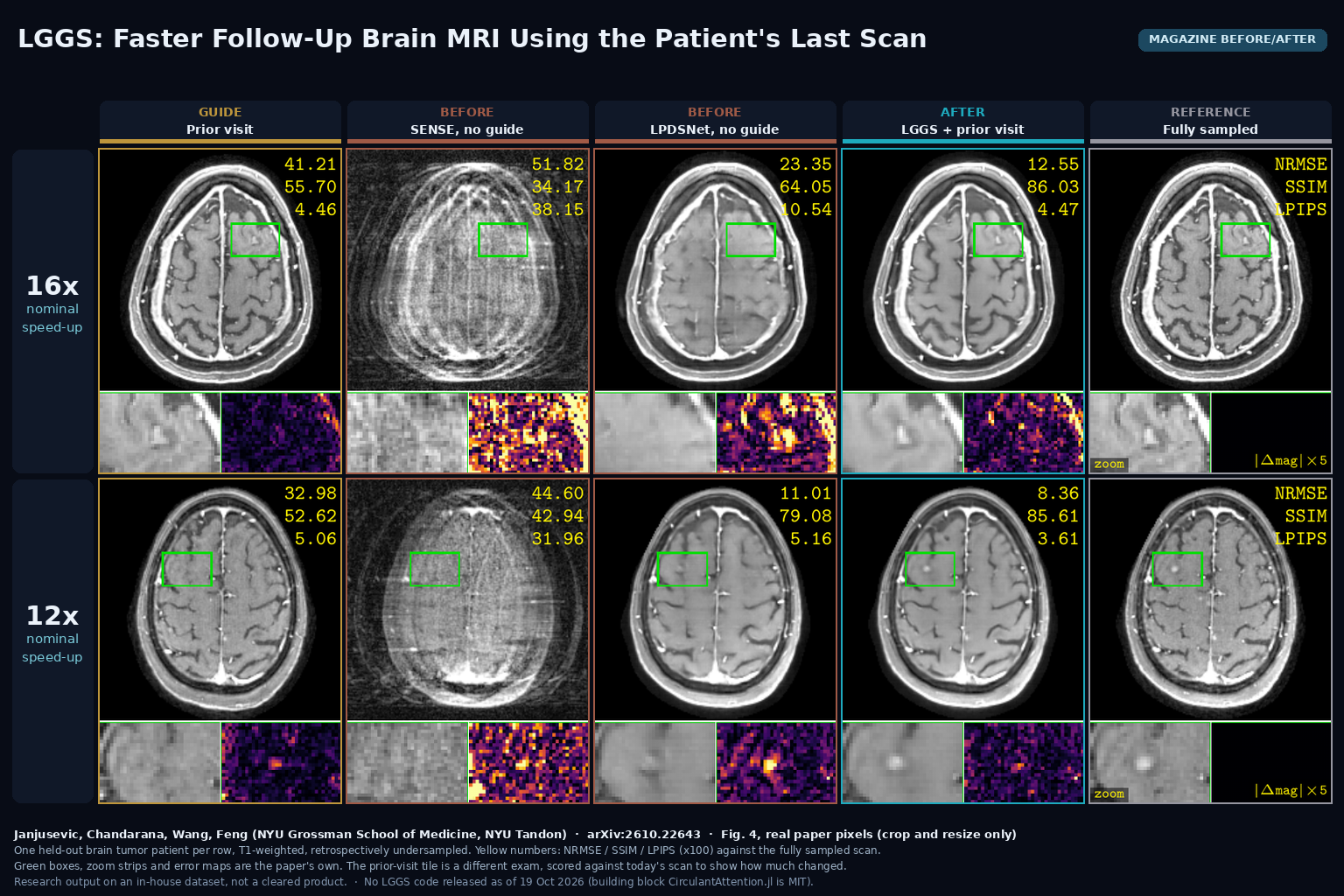
LGGS: Faster Follow-Up Brain MRI Using the Patient’s Last Scan
LGGS rebuilds heavily undersampled follow-up brain MRI using the patient’s prior exam as a guide, without copying it into the new image. arXiv:2610.22643.

LGGS rebuilds heavily undersampled follow-up brain MRI using the patient’s prior exam as a guide, without copying it into the new image. arXiv:2610.22643.
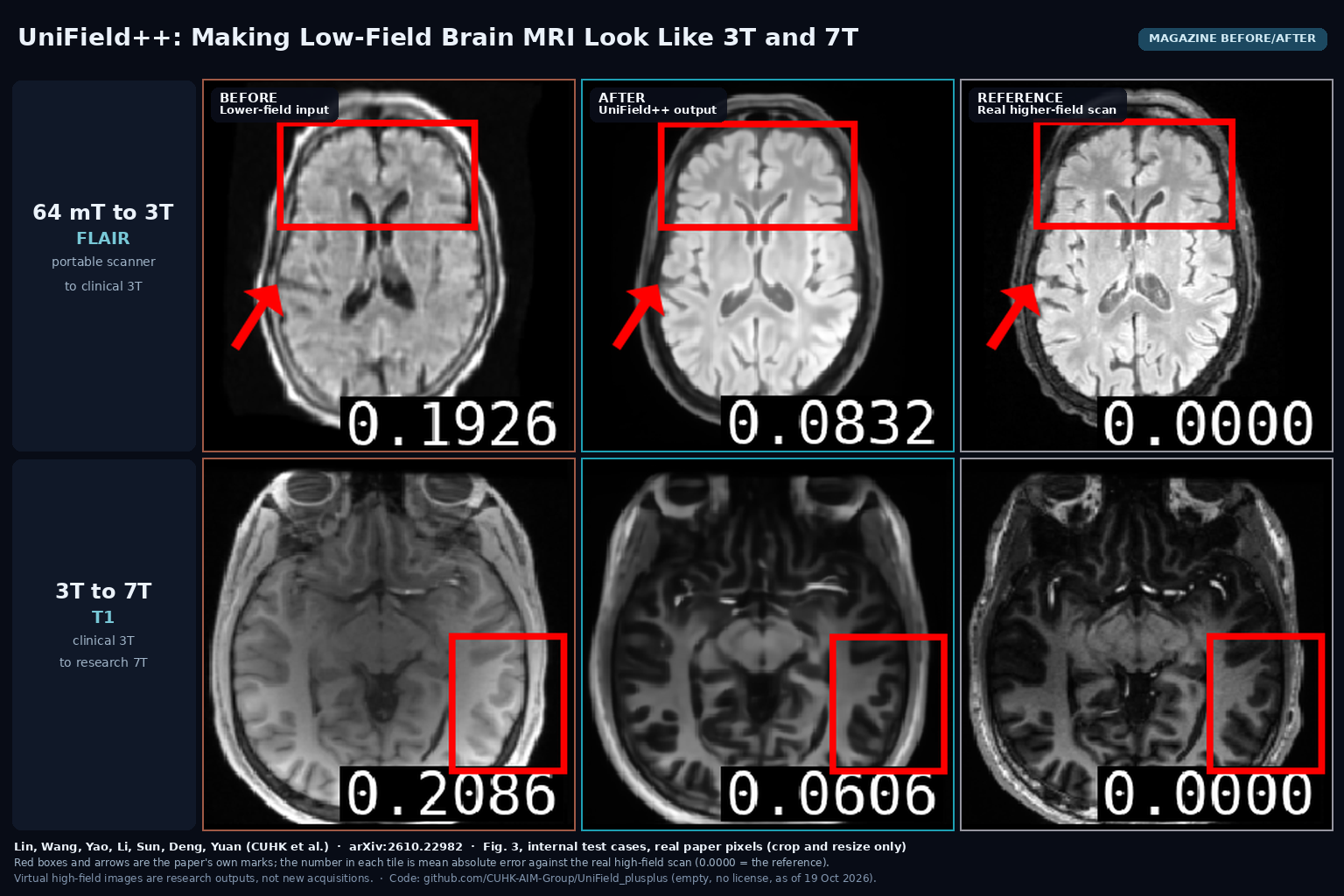
UniField++ turns 64 mT brain MRI into virtual 3T and 3T into virtual 7T, with a vision-language planner that flags regions likely to go wrong. arXiv:2610.22982.
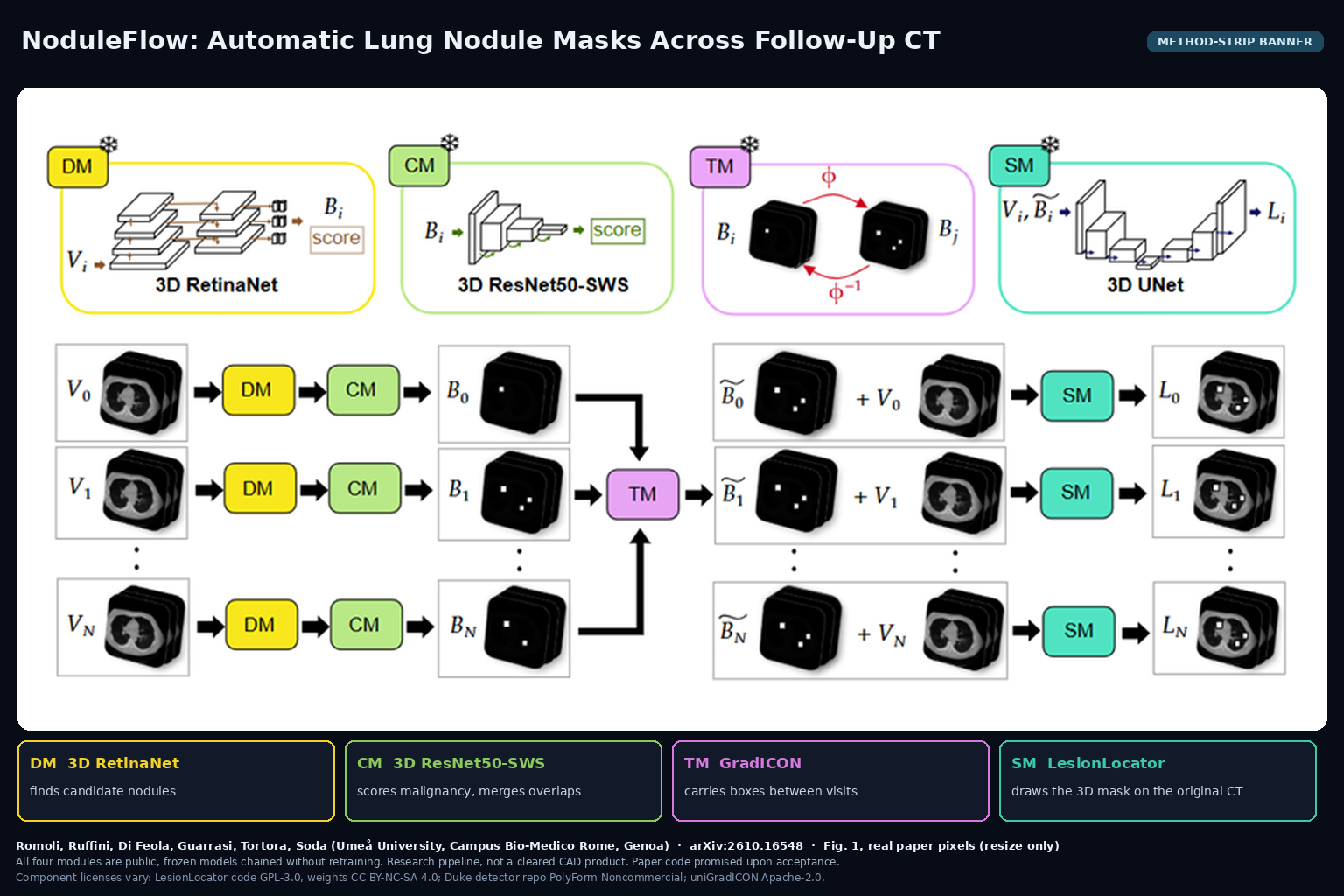
NoduleFlow chains four public, frozen models to detect, score and segment lung nodules across a patient’s follow-up CTs with no clicks. arXiv:2610.16548.
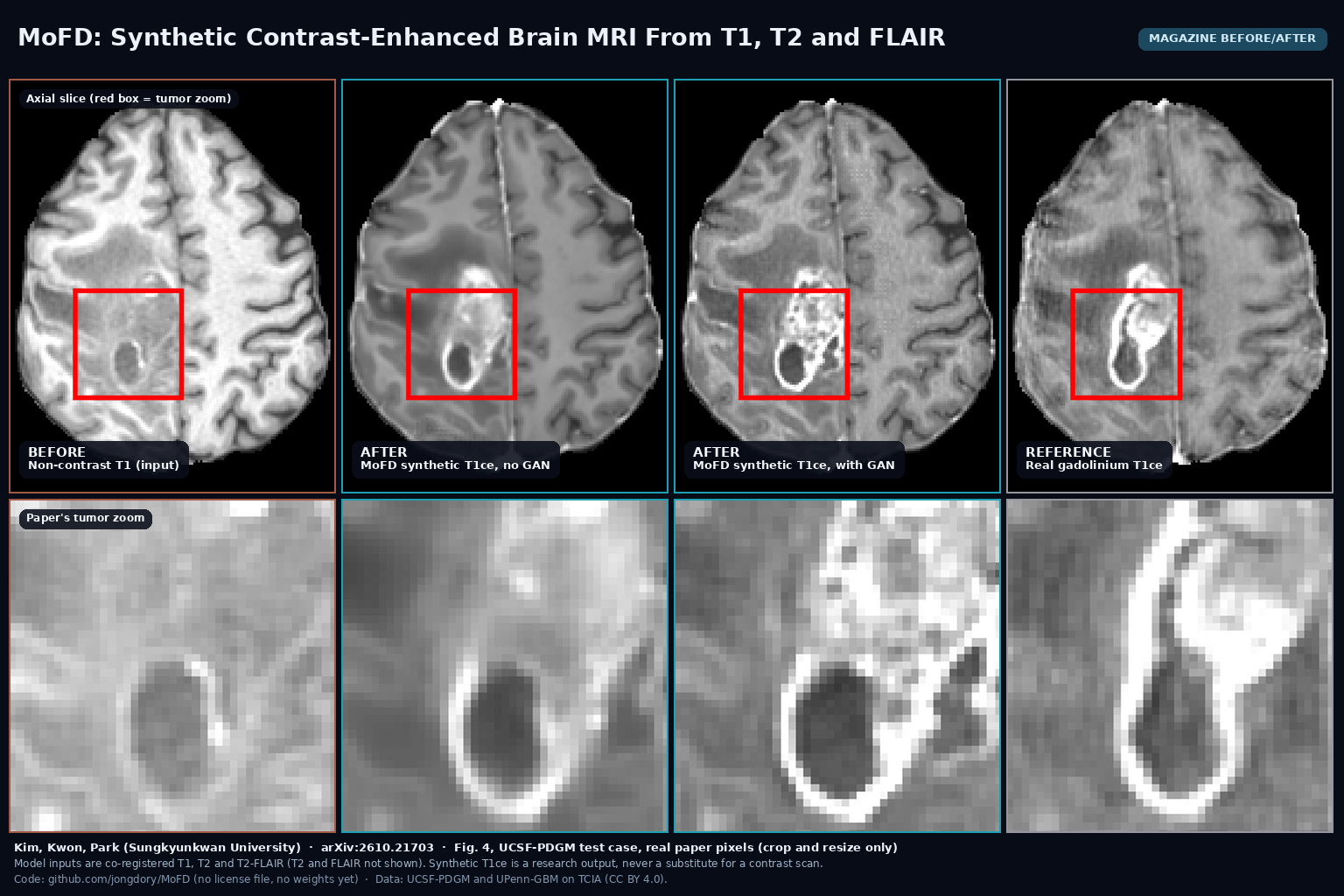
MoFD predicts a contrast-enhanced T1 brain MRI from non-contrast T1, T2 and FLAIR with a 3D U-Net that mixes sequence features and their differences. arXiv:2610.21703.
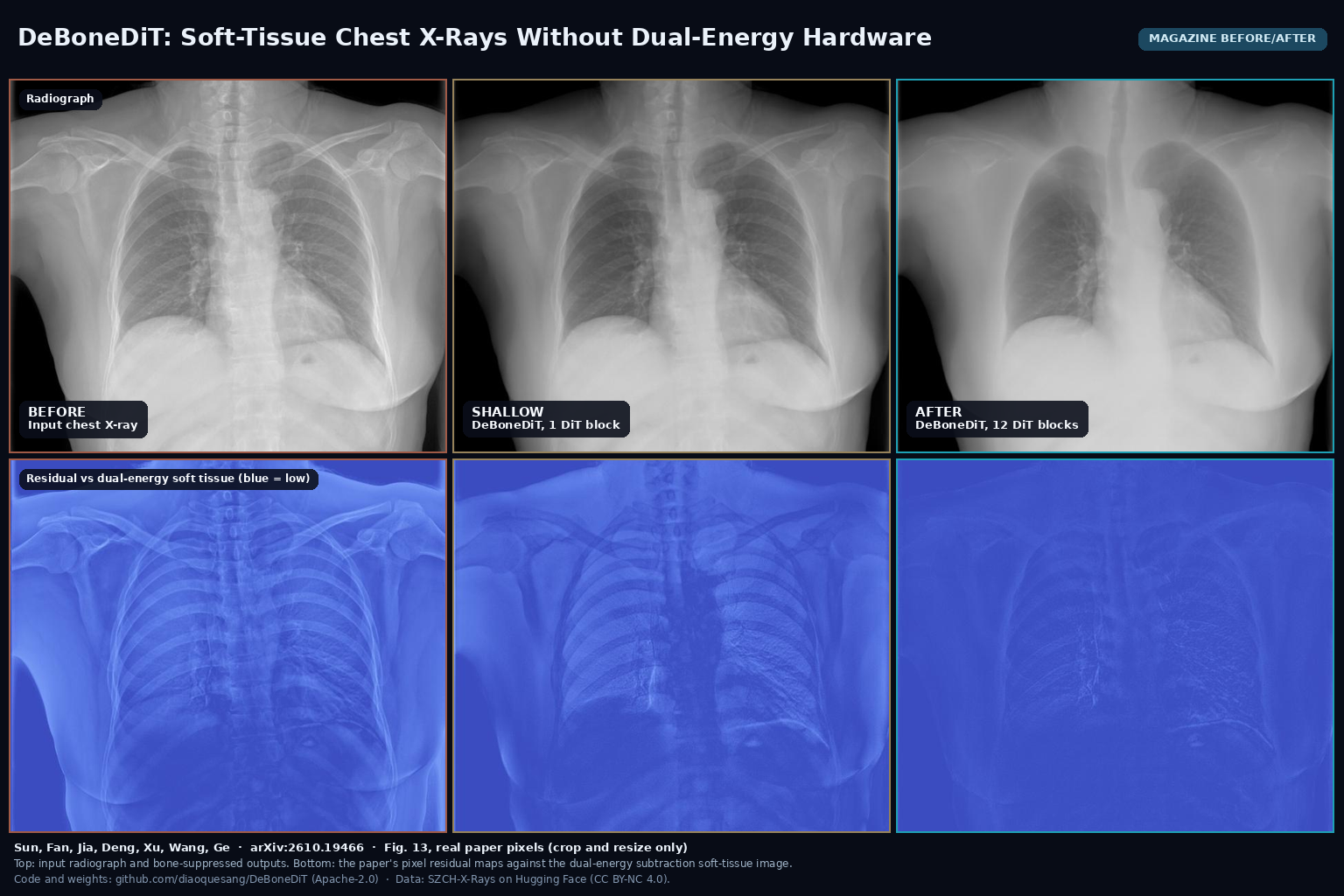
DeBoneDiT turns one standard PA chest X-ray into a dual-energy style soft-tissue image in about 3.4 seconds. Apache-2.0 code and weights, arXiv:2610.19466.
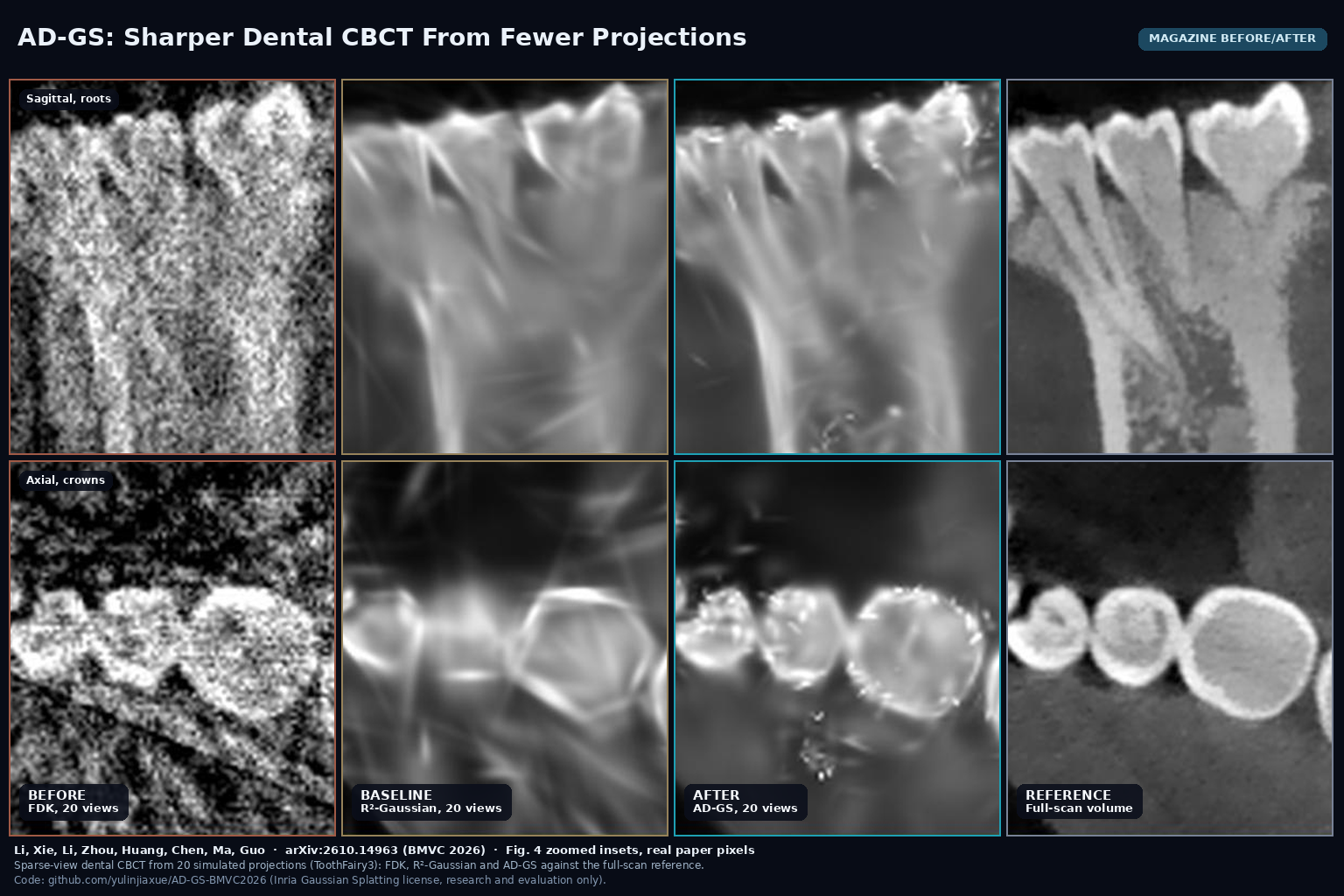
AD-GS fits each dental CBCT scan with 3D Gaussians, steering them toward enamel and bone so 20 to 30 projections keep root and crown edges. arXiv:2610.14963, BMVC 2026.