
AI regulatory compliance

Master ai regulatory compliance with proven strategies from industry experts. Get actionable insights to navigate complex regulations effectively.
Medical Image Annotation Techniques for Healthcare AI

Mastering Medical Image Annotation Fundamentals Medical image annotation is the foundation of modern AI in healthcare. It involves labeling medical images, such as X-rays, MRIs, and CT scans, to create training datasets for machine learning algorithms. This process teaches AI systems to interpret the complexities of medical imagery, aiding in diagnosis and enhancing patient care. […]
Computer vision in healthcare

Computer vision in healthcare is software that reads medical pixels — X-ray, CT, MRI, ultrasound, whole-slide pathology, fundus photos, endoscope video — and returns a mark, a mask, or a score a clinician then uses or ignores. It is not a robot doctor. It does not sign the report. The same job gets sold as […]
Machine learning for medical imaging

Machine learning for medical imaging is software that learns from labeled scans — X-ray, CT, MRI, ultrasound, mammography — and returns a mark, a mask, or a score a clinician then uses or ignores. It is not a robot radiologist. It does not sign the report. The same job gets sold as “machine learning in […]
Medical image processing
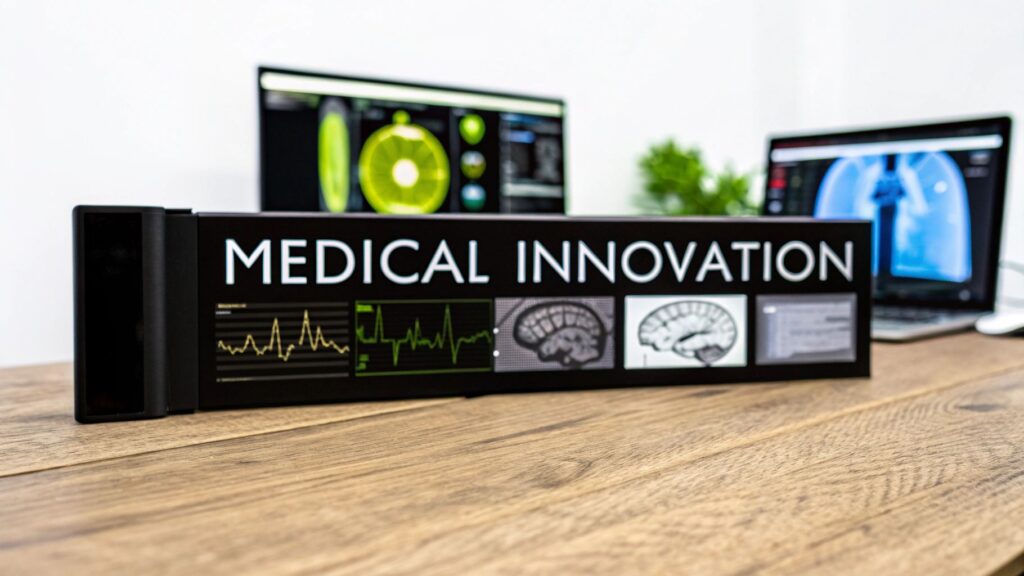
Medical image processing is the set of computational steps that turn a raw CT, MRI, PET, or ultrasound into something you can measure or fuse. It is the field, not a product list. The software that runs these steps is image analysis software. Segmentation as its own job is medical image segmentation. Three techniques do […]
Cardiac segments
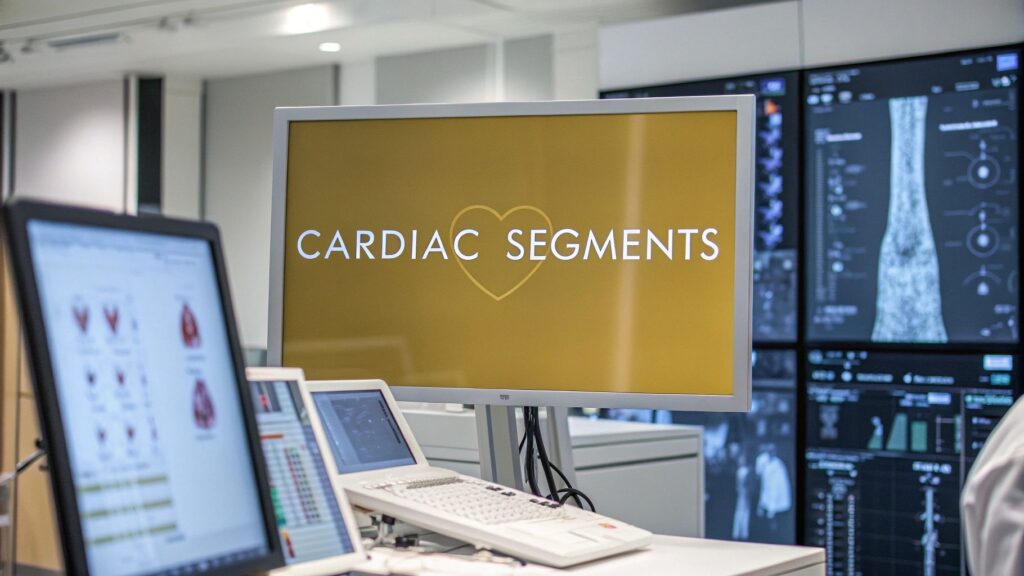
Cardiac segments are the AHA 17-segment map of the left ventricle: a shared language for wall motion, perfusion, and coronary territory. It is not a chamber mask. It is not a volume or an ejection-fraction number. If you meant label LV / RV / myocardium on cine MRI or CT → heart segmentation. If you […]
Effective lung segments on ct: A Practical Guide
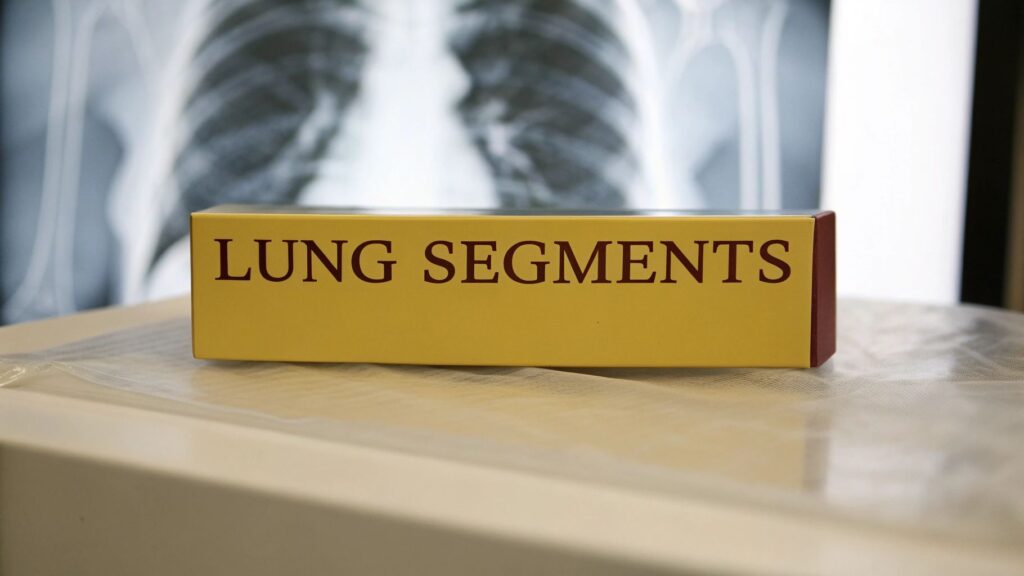
Decoding Lung Segments on CT: Foundational Anatomy Understanding lung segments on CT scans begins with a firm grasp of bronchopulmonary anatomy. Imagine the lungs as an inverted tree: the trachea, the trunk, branches into the right and left main bronchi. These bronchi divide into progressively smaller airways, ultimately reaching the bronchopulmonary segments. These segments, the […]
Cross section of skeletal muscle

A cross section of skeletal muscle is the cut that shows the connective-tissue layers, the fibers, and the sarcomeres that actually pull. This page is that anatomy — epimysium / perimysium / endomysium, ACSA vs PCSA, pennation, fiber types. It is not a medical-imaging modality survey. If you meant what a medical cross-section image is […]
VTK Data Format Guide: Mastering Advanced 3D Visualization

Demystifying the VTK Data Format: Core Concepts The Visualization Toolkit (VTK) data format is essential for numerous scientific visualization applications. Grasping its core concepts opens up a powerful toolkit for representing and interacting with complex 3D data. Think of VTK as a universal translator for scientific data, converting information from simulations and experiments into a […]
Rotate a 3D image

Rotate a 3D image, in medical volumes, is two different jobs: reorient so the array matches a named patient frame (LPS / RAS), and resample a rotation so the voxels themselves turn (Euler / affine). It is not a Blender orbit of a product shot. It is not a mesh cut. It is not a […]