
Abdominal CT Report Sentence In, 3D Finding Mask Out, Learned From the Arrows and Measurement Lines Already in PACS
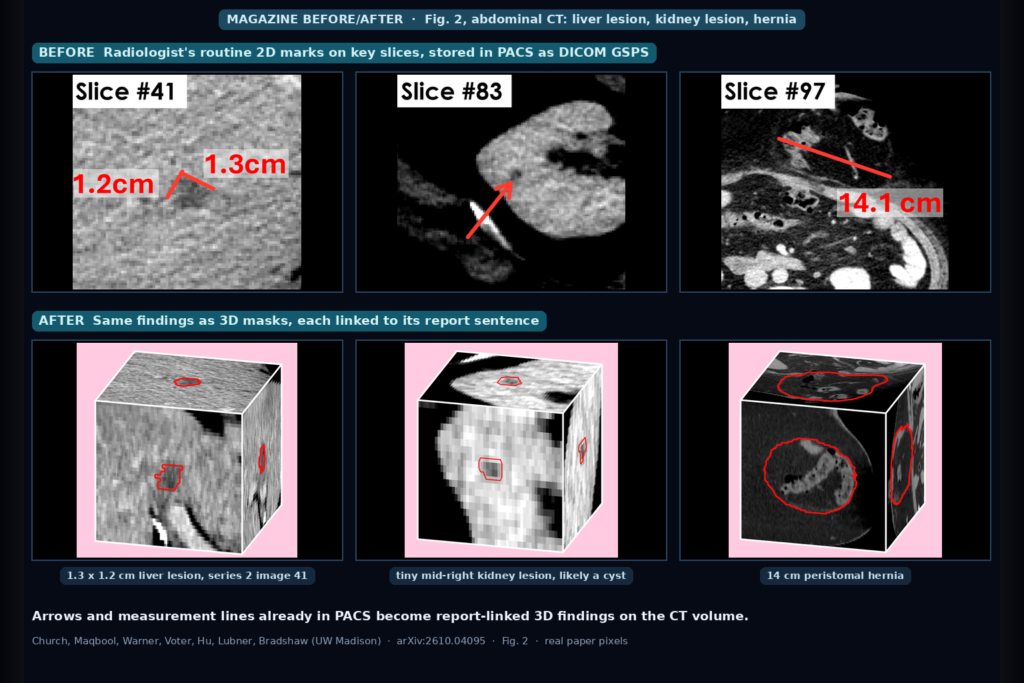
Give it one report sentence and an abdominal CT; get a 3D mask of that finding back. LocusCT learns from 105K routine PACS arrows and measurement lines matched to report text. Church et al., arXiv:2610.04095.
Segmented CT or MR In, Real-Time Cinematic 3D Out That Recolors and Hides Tissue Without Refitting
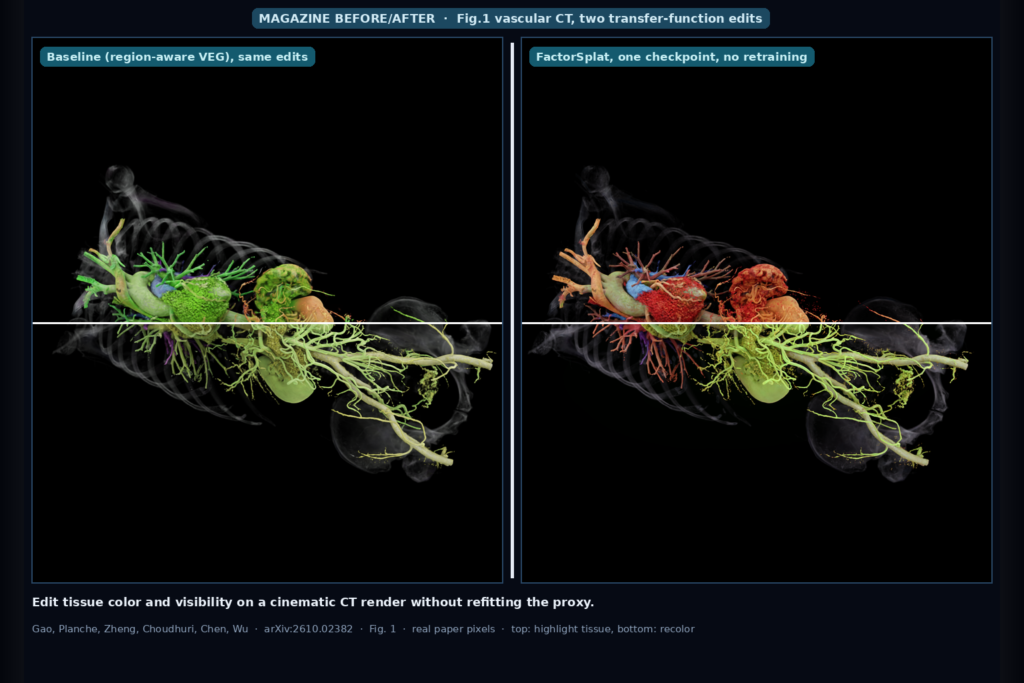
Hang a segmented CT or MR in; get a real-time cinematic 3D proxy out whose tissue colors, opacity, and visibility you can change without refitting. Gao et al., arXiv:2610.02382.
Reconstructed Implant CT In, Streak-Reduced Tissue Out Without Raw Projections or Training
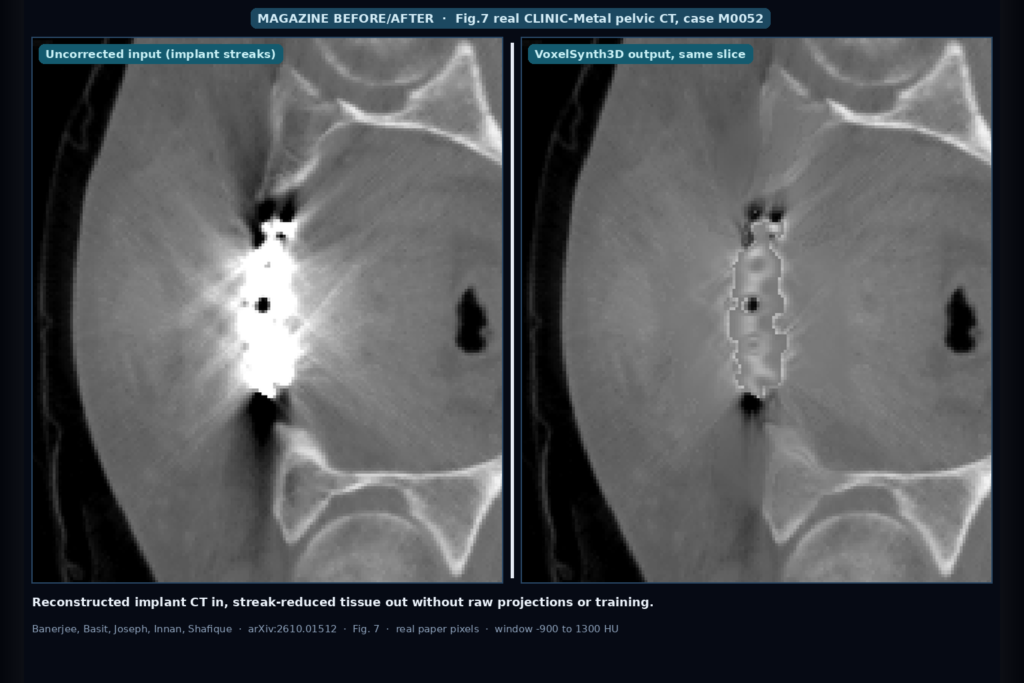
Hang a reconstructed implant CT in; get a streak-reduced derived series out with no raw projections, vendor kernel, or trained weights. Banerjee et al., arXiv:2610.01512.
Zero-Footprint DICOM Viewer OEM Embed Checklist
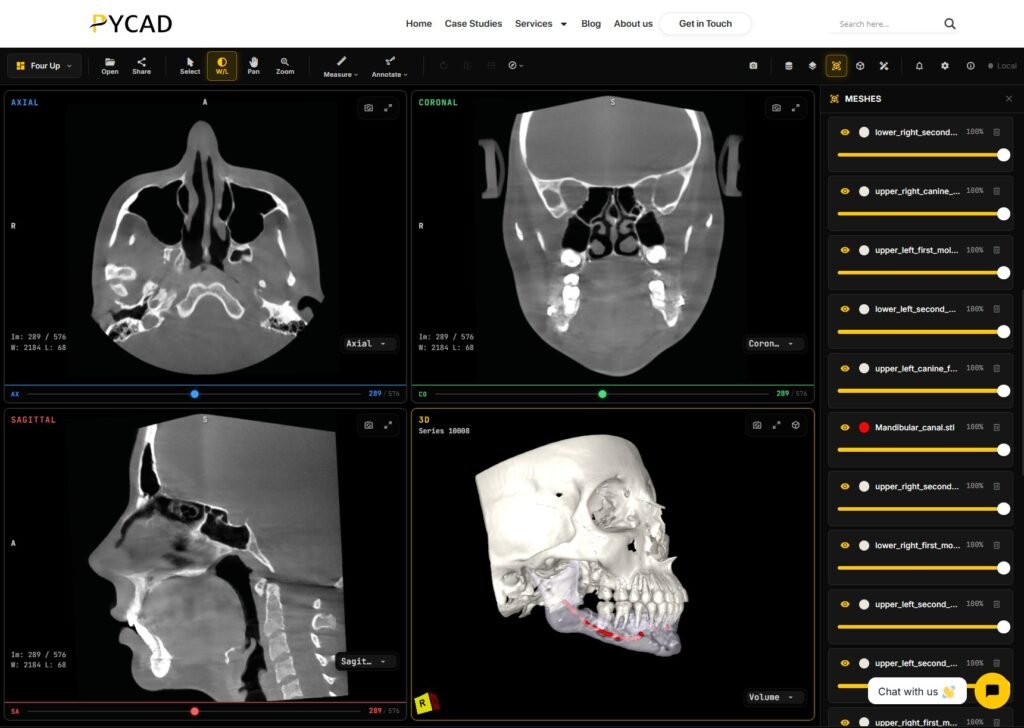
A zero-footprint DICOM viewer runs in the browser with nothing installed on the user’s computer. If you run a platform, such as a teleradiology service, a dental software suite, an AI product, or a clinical trial portal, you probably want that viewer inside your app, under your brand, opening CT, MRI, and CBCT studies your […]
How Dentists Open a CBCT Scan Sent by an Imaging Center
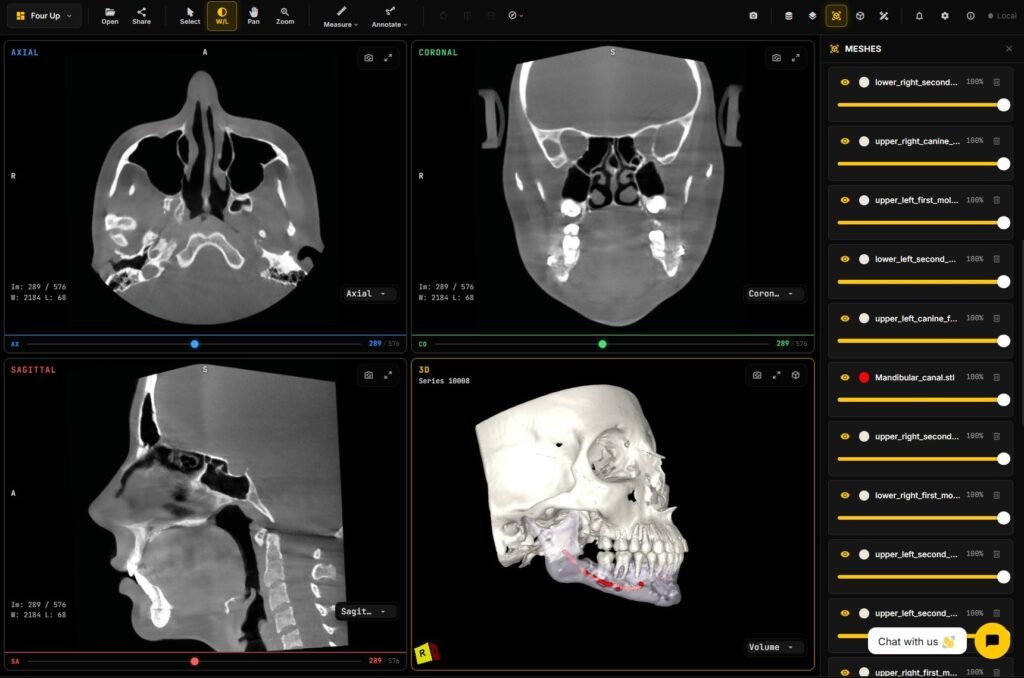
A patient walks in with a CBCT from an imaging center. It might be a disc in an envelope, a USB stick, a download link from the center’s patient portal, or a ZIP sent through a file transfer service. Inside is a stack of DICOM files, usually several hundred of them for one scan. Opening […]
Multimodal MRI In; ET, RC, TC, and WT Overlays Out With RC-Aware Pre vs Post Routing
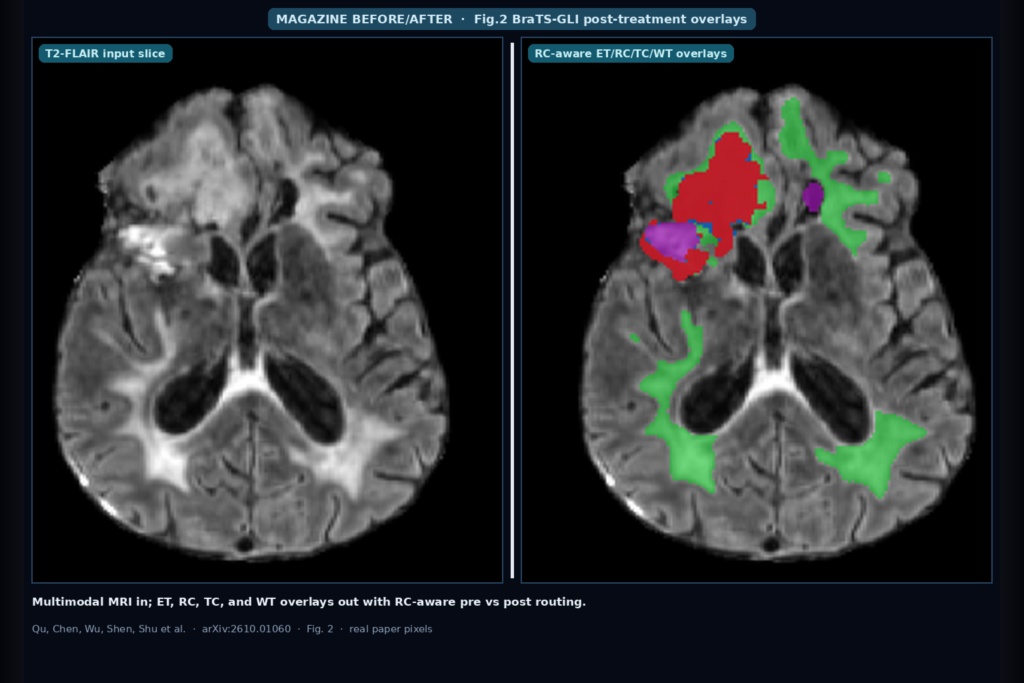
Hang T1/T1Gd/T2/T2-FLAIR glioma MRI in; get ET, RC, TC, and WT overlays out with treatment-status routing. BraTS-GLI 2025 2nd place (ECNU NYU). arXiv:2610.01060.
CTA, MRA, and Routine Brain MRI In; Aneurysm Labels, Crosshair Localizers, and 13-Vessel Overlays Out
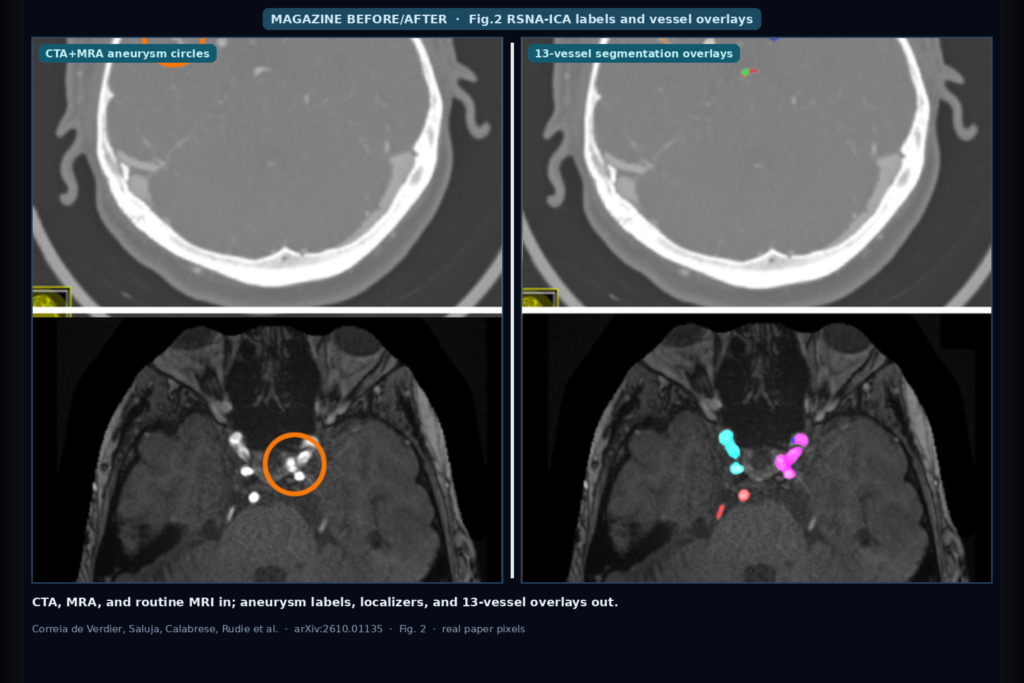
Hang CTA, MRA, and routine brain MRI from RSNA-ICA: aneurysm presence and 13-location labels, crosshair localizers, plus 178-series vessel NIfTI overlays. 7202 series, 21 sites. arXiv:2610.01135.
SWAN Stack In, Synthetic-Trained Microbleed Overlays Out When Real CMB Labels Are Scarce
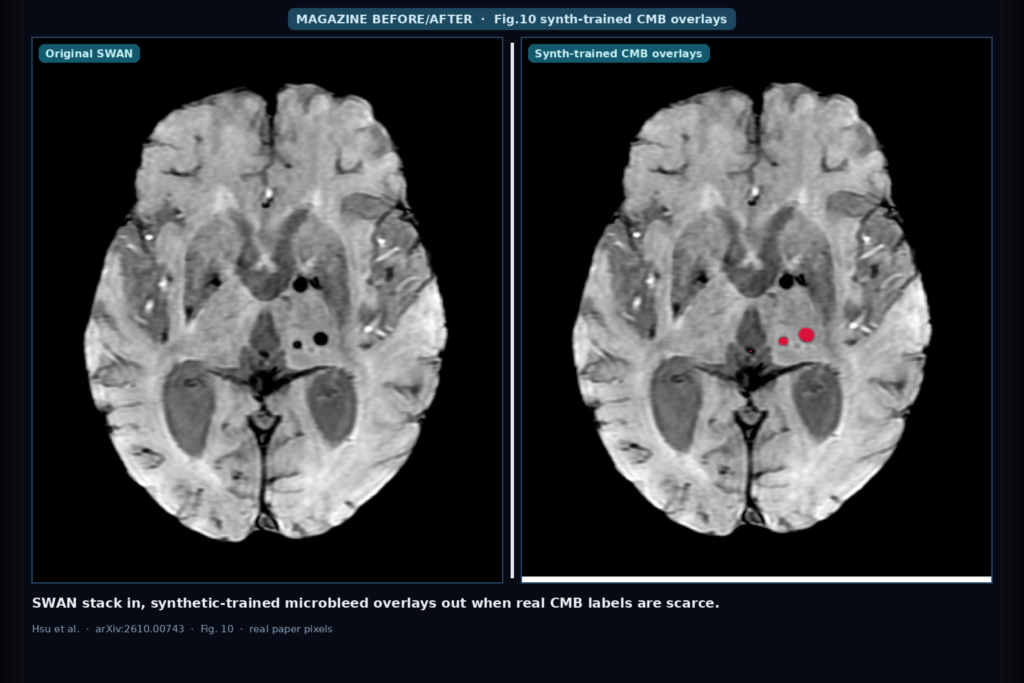
Hang a SWAN stack into a neuro MRI workflow: synthetic soft-ellipsoid CMBs on real negative hosts train a MONAI 3D U-Net that keeps ~84% Dice / ~88% lesion sensitivity vs real-trained when CMB labels are scarce. Hsu et al., arXiv:2610.00743.
PACS Screenshot and CT Stack In, Automated CNR Background ROIs Plus Phantom-Free NPS and TTF Out
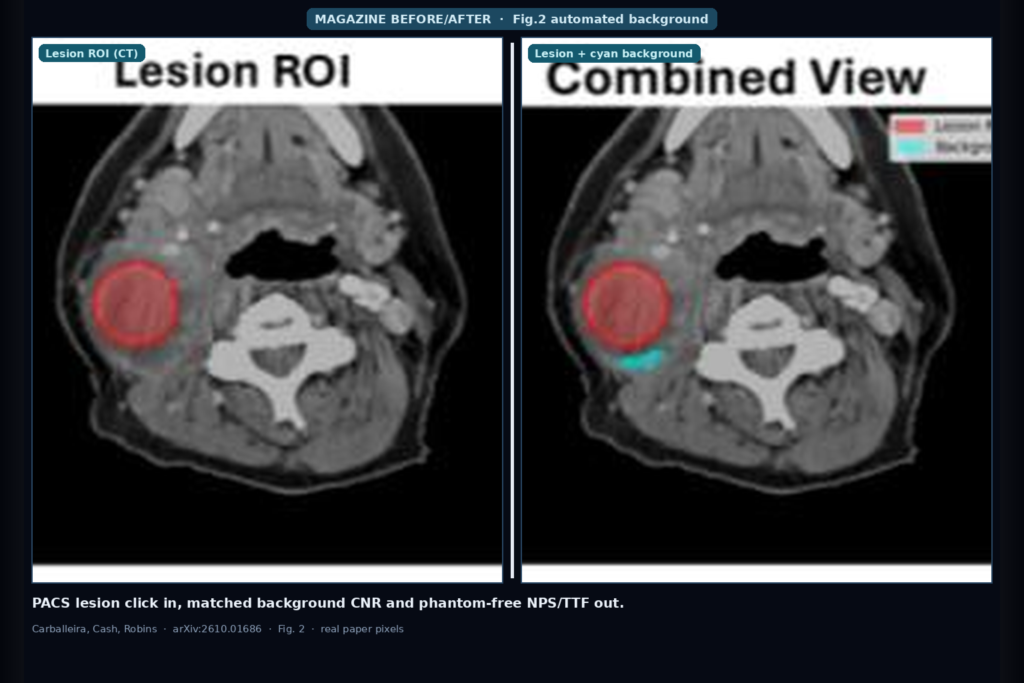
Hang a PACS screenshot and CT stack into AnatomIQ: click the lesion, get matched cyan background ROIs for CNR, plus phantom-free NPS and TTF from patient anatomy. ~2-3 min/case. arXiv:2610.01686.
Incomplete Brain MRI Sequences In, Joint WMH and Stroke Lesion Overlays Out
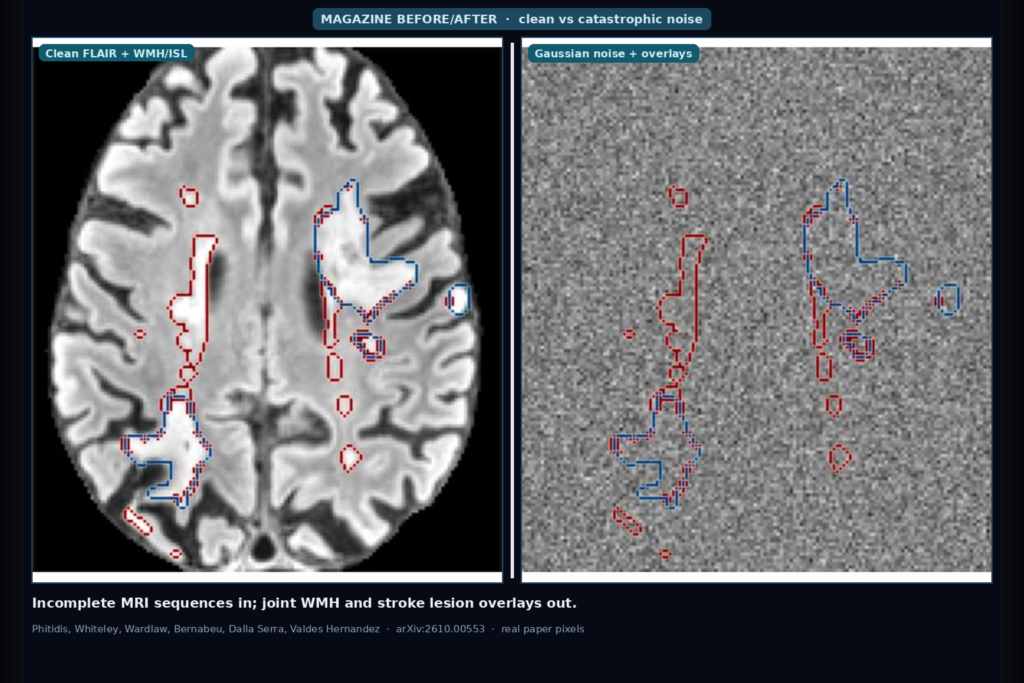
Hang incomplete T1w/T2w/FLAIR/DWI stacks into hetero-modal WMH+ISL segmentation with MMAR corruption routing. On mostly uni-modal training, hetero-modal mean macro DSC rises to 47.93% vs 42.29% specialists. arXiv:2610.00553.