
Pix2Point: Spine X-ray Landmarks From Dense Pixel Embeddings
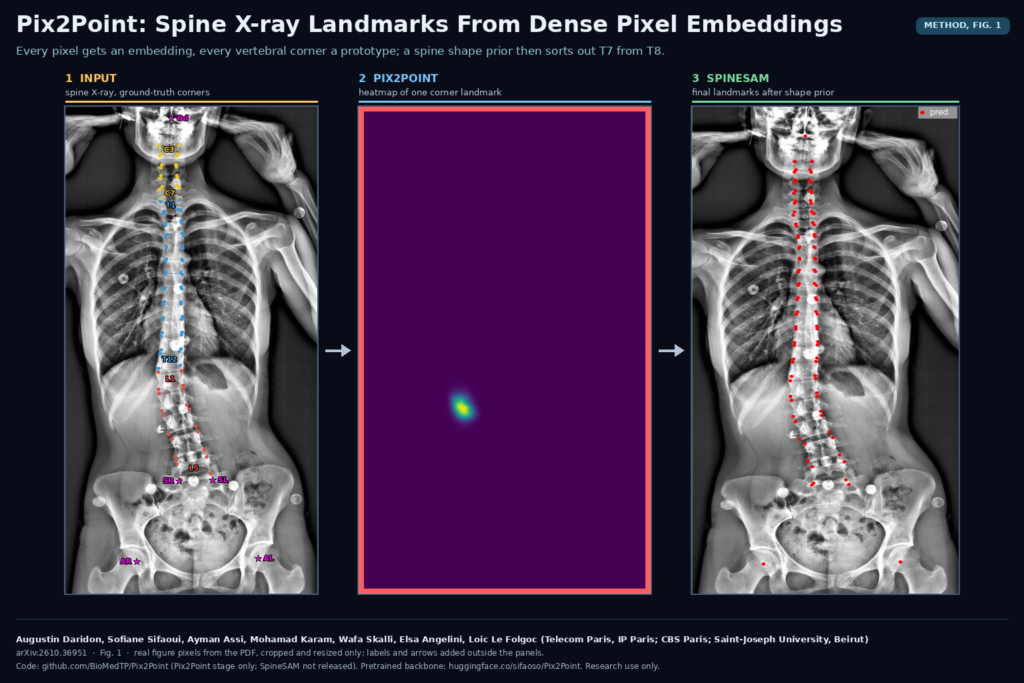
Every pixel gets an embedding and every vertebral corner a prototype; a spine shape prior then decides which corner is which.
CTBakeGS: Shareable 3D CT Renderings Without Training
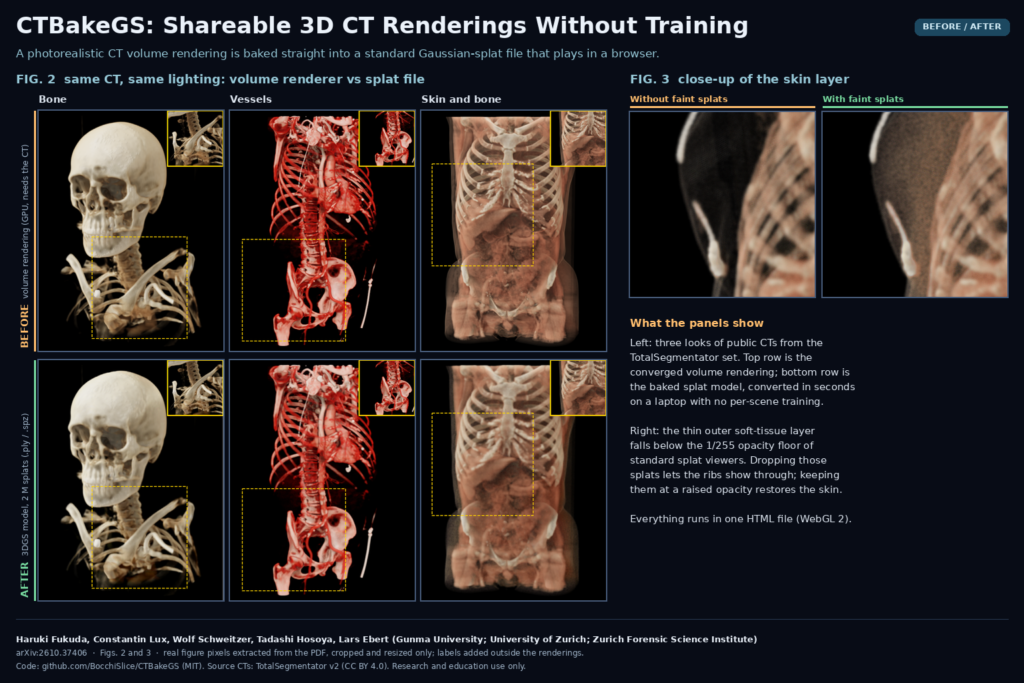
A browser tool bakes lit CT volume renderings into standard Gaussian-splat files in seconds, with no training and MIT code.
MPF Mapping: A Myelin Readout From Routine Brain MRI
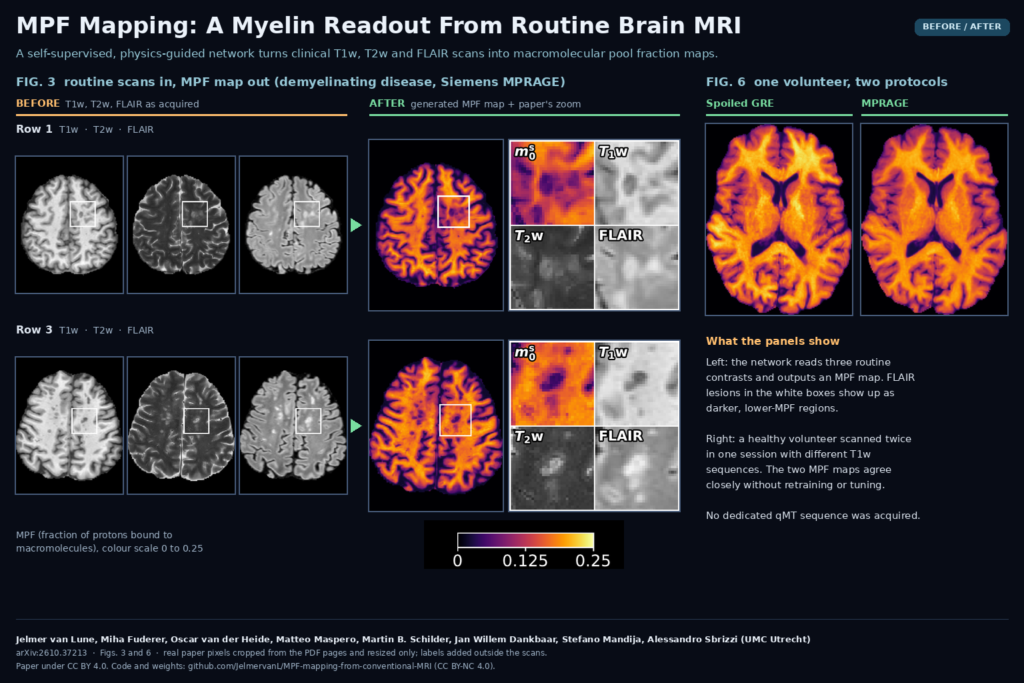
A self-supervised network turns T1w, T2w and FLAIR scans into macromolecular pool fraction maps, with public code and weights.
Share a Segmented CT or MRI Case as a Link, Not Just a 3D Model
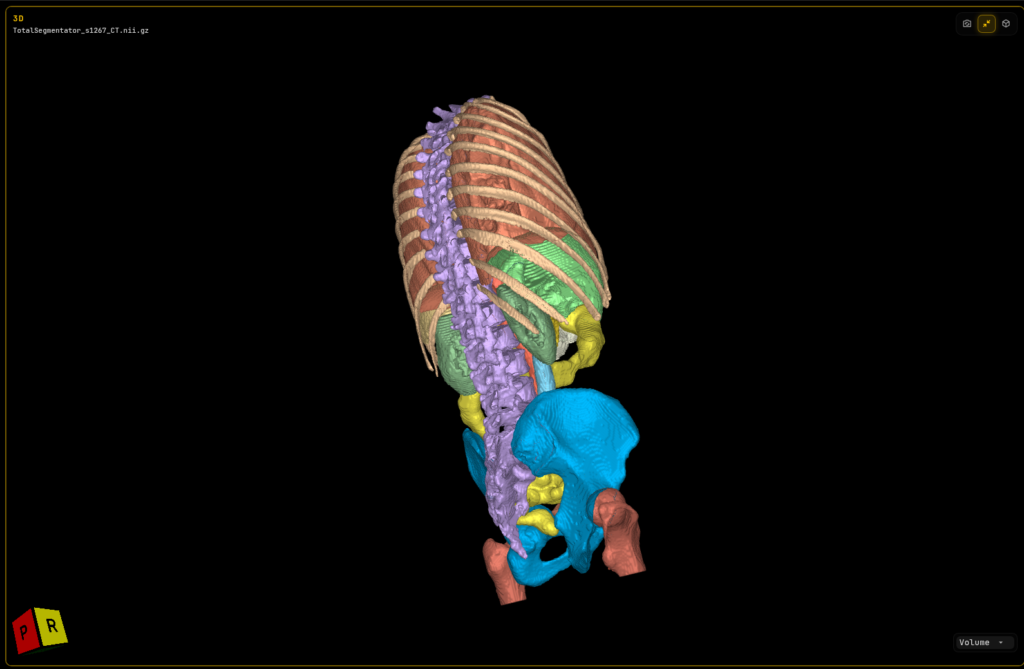
Send clients the CT or MRI scan, label maps and 3D meshes in one browser link that opens on desktop or phone, with nothing to install. Try the live demo.
SlimFormer++: Lean 3D Segmentation for CT, MRI and Ultrasound
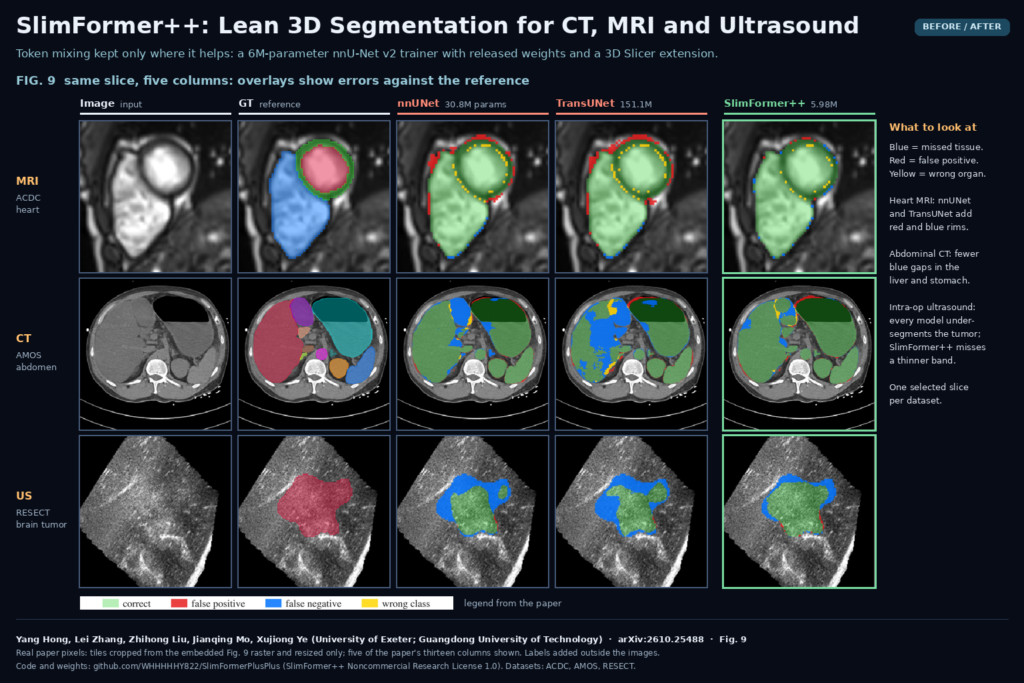
An nnU-Net v2 trainer that keeps token mixing only where it helps, with released weights and a 3D Slicer extension that runs on CPU.
MedVTok: One Open Tokenizer for 2D Images and 3D Scans
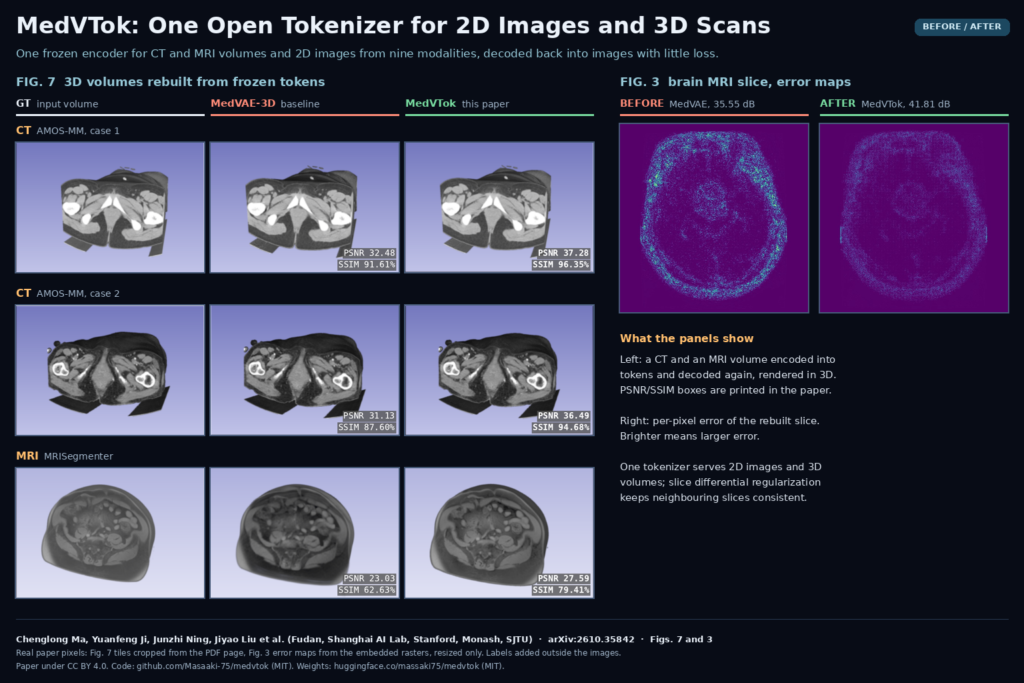
One encoder turns CT and MRI volumes and 2D images from nine modalities into shared tokens, with MIT code and public weights.
XGLASS: Radiologist Gaze Tells AI Which Chest CT Slices to Read
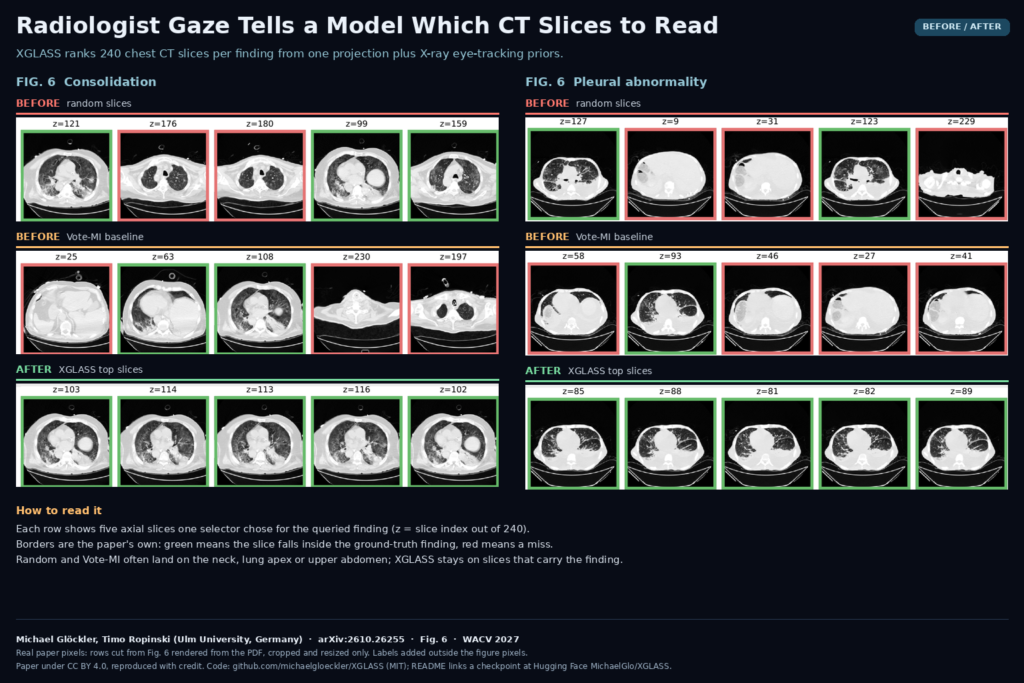
A 2D ranker built on chest X-ray eye-tracking picks the CT slices a 2D VLM should check, at a fraction of 3D cost.
BasisSimulator.jl: One Spectral CT Decomposition for Every Scanner
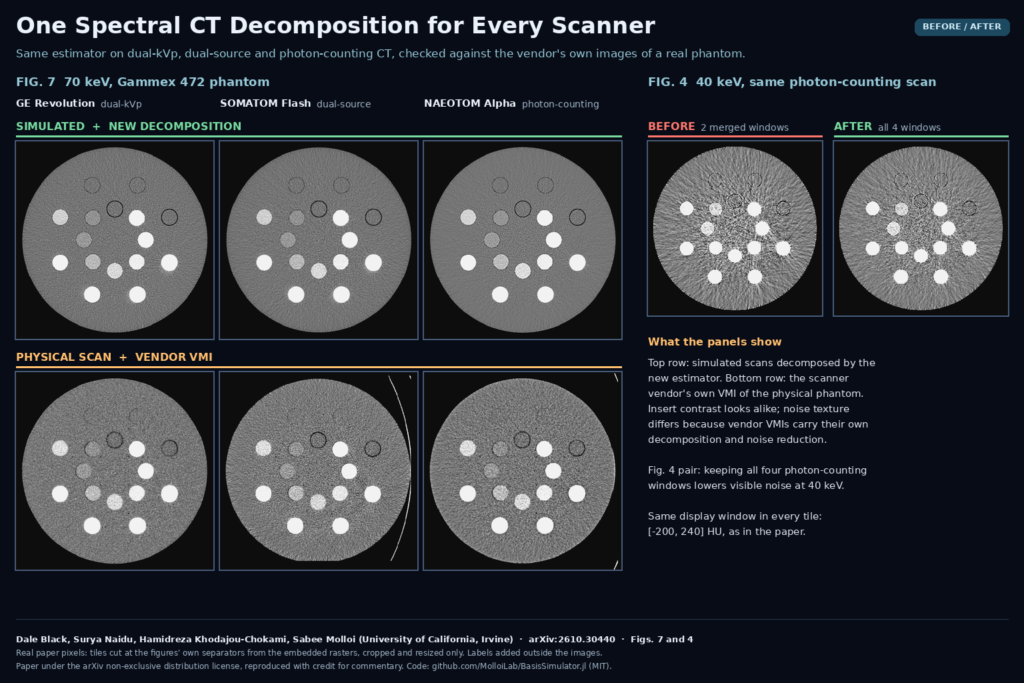
A likelihood estimator in an open Julia CT simulator handles dual-kVp, dual-source and photon-counting data and keeps every energy window.
Embedding a CBCT viewer in a dental SaaS: build, open-source, or license
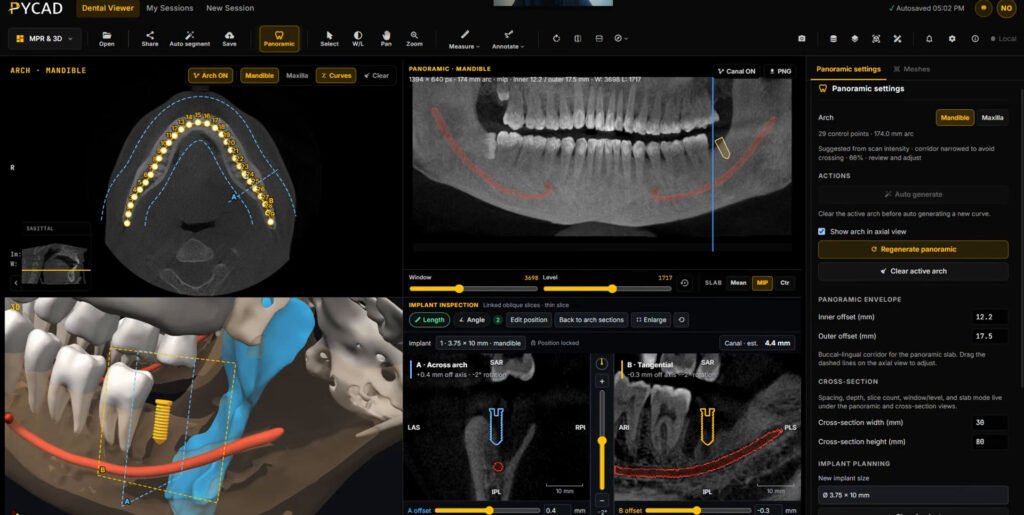
If you run dental software and want to embed a CBCT viewer in your product, you have three realistic options. You can build one from scratch on imaging libraries such as VTK, vtk.js, ITK, or Cornerstone3D. You can extend an open-source viewer, which usually means OHIF on top of Cornerstone3D, with an archive like Orthanc […]
How dental teleradiology groups read CBCT scans in the browser
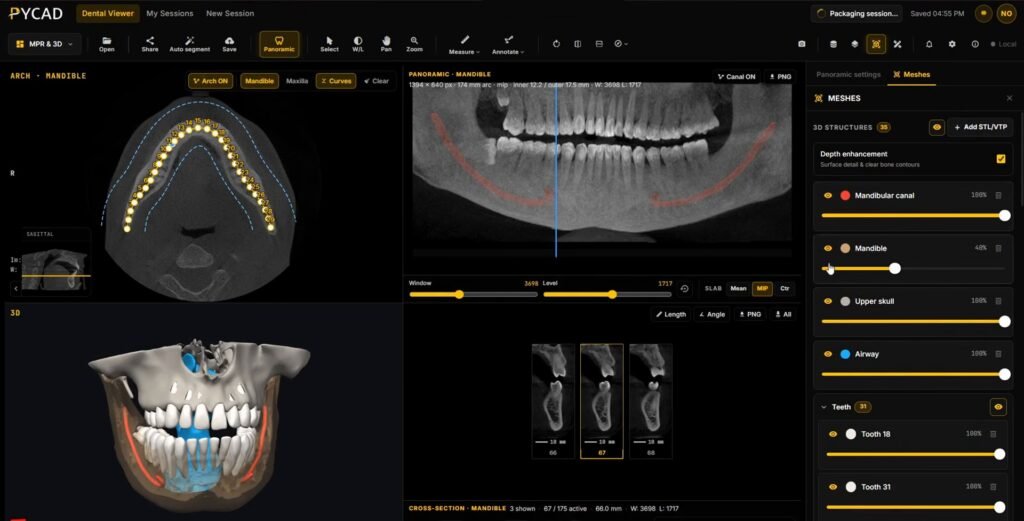
Most dental and OMF teleradiology groups we talk to read CBCT in a web viewer that opens in the browser with nothing to install. The radiologist opens the scan from a link or a worklist, reviews it in MPR (axial, coronal and sagittal), builds a panoramic along the dental arch, scrolls the cross-sections along that […]